Mendelevium
Videos
Mendelevium is a synthetic chemical element; it has symbol Md and atomic number 101. A metallic radioactive transuranium element in the actinide series, it is the first element by atomic number that c

The 60-inch cyclotron at the Lawrence Radiation Laboratory, University of California, Berkeley, in August 1939

The data sheet, showing stylus tracing and notes, that proved the discovery of mendelevium.
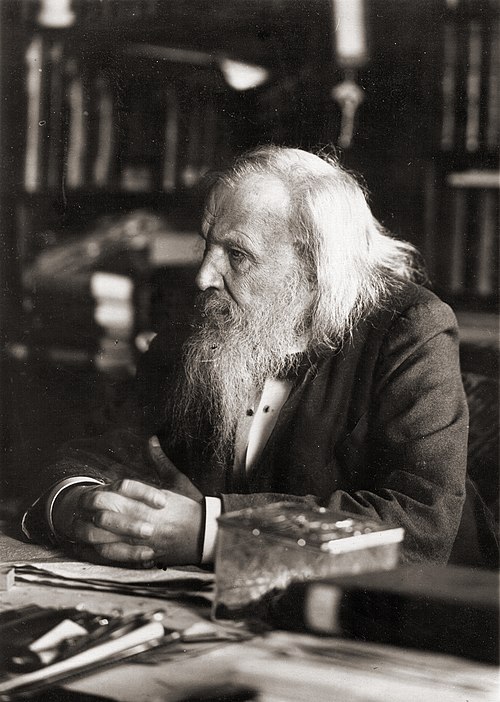
The element was named after Dmitri Mendeleev.
Dmitri Mendeleev
Videos
Dmitri Ivanovich Mendeleev was a Russian chemist known for formulating the periodic law and creating a version of the periodic table of elements. He used the periodic law not only to correct the then-
Mendelevium
…neutron bombardment of lighter elements. It is the thirteenth actinide, the ninth transuranic element, and the first transfermium; it is named after Dmitri Mendeleev, the father of the periodic table. Like all the transfermiums, it can only be produced in particle accelerators by bombarding lighter elements with…

Dmitri Mendeleev

Mendeleev's 1871 periodic table

Mendeleev, Alfred Werner, Adolf von Baeyer, and other prominent chemists

Mendeleev Medal