Microbial mat
Videos
A microbial mat is a multi-layered sheet or biofilm of microbial colonies, composed of mainly bacteria and/or archaea. Microbial mats grow at interfaces between different types of material, mostly on

The cyanobacterial algal mat, salty lake on the White Sea seaside
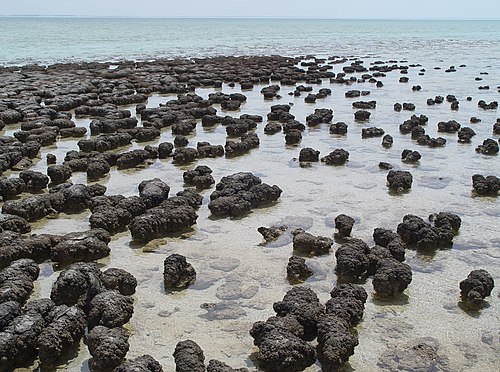
Stromatolites are formed by some microbial mats as the microbes slowly move upwards to avoid being smothered by sediment.

Chemosynthetic microbial mats covering photosynthetic red algae and coral. Hydrothermal vent and coral reef communities overlap at 190 m depth, at the Mariana arc. A golden hind swims nearby.

Wrinkled Kinneyia-type fossil sedimentary structures formed beneath cohesive microbial mats in peritidal zones. The image shows the location, in the Burgsvik beds of Sweden, where the texture was first identified as evidence of a fossil microbial mat.
Archean
Videos
The Archean, in older sources sometimes called the Archaeozoic, is the second of the four geologic eons of Earth's history, preceded by the Hadean Eon and followed by the Proterozoic and the Phanerozo
Microbial mat
…of life History of life −4500 — – −4000 — – −3500 — – −3000 — – −2500 — – −2000 — – −1500 — – −1000 — – −500 — – 0 — P h a n P r o t e r o z o i c A r c h e a n H a d e a n ← Meteor Bombardment ends; first geochemical signs of life ← Earliest stromatolites ← ? Beginning of photosynthesis ← ? Beginning of…

The pale orange dot, an artist's impression of the early Earth which is believed to have appeared orange through its hazy, methane rich, prebiotic secondary atmosphere. Earth's atmosphere at this stage was somewhat comparable to today's atmosphere of Titan.

Lithified stromatolites on the shores of Lake Thetis, Western Australia. Archean stromatolites are the first direct fossil traces of life on Earth.