Microwave
Videos
Microwave is a form of electromagnetic radiation with wavelengths shorter than other radio waves but longer than infrared waves. Its wavelength ranges from about one meter to one millimeter, correspon
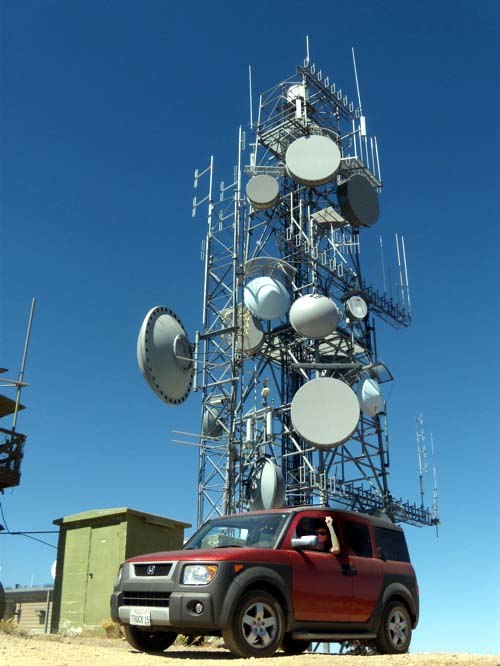
A telecommunications tower with a variety of dish antennas for microwave relay links on Frazier Peak, Ventura County, California. The apertures of the dishes are covered by plastic sheets (radomes) to keep out moisture.

Waveguide is used to carry microwaves. Example of waveguides and a diplexer in an air traffic control radar.

Disassembled radar speed gun. The grey assembly attached to the end of the copper-colored horn antenna is the Gunn diode which generates the microwaves.

The parabolic antenna (lower curved surface) of an ASR-9 airport surveillance radar which radiates a narrow vertical fan-shaped beam of 2.7–2.9 GHz (S band) microwaves to locate aircraft in the airspace surrounding an airport
Electromagnetic radiation
Videos
In physics, electromagnetic radiation or an electromagnetic wave is a self-propagating wave of the electromagnetic field that carries momentum and radiant energy through space. It encompasses a broad
Microwave
…Microwave is a form of electromagnetic radiation with wavelengths shorter than other radio waves but longer than infrared waves. Its wavelength ranges from about one meter to one millimeter, corresponding…

James Clerk Maxwell (1831–1879)

Aurora Space Shuttle EO