Midas is a verse drama in blank verse by the Romantic writers Mary Shelley and Percy Bysshe Shelley. Mary wrote the drama and Percy contributed two lyric poems to it. Written in 1820 while the Shelleys were living in Italy, Mary Shelley tried unsuccessfully to have the play published by children's magazines in England in the 1830s; however, it was not published until A. Koszul's 1922 scholarly edition. Whether or not the drama was ever meant to be staged is a point of debate among scholars. The play combines the stories of the musical contest between Apollo and Pan and that of King Midas and his ability to turn everything he touches to gold.
Midas was first published in 1922
Apollo with his lyre by Stanisław Wyspiański (c. 1897)
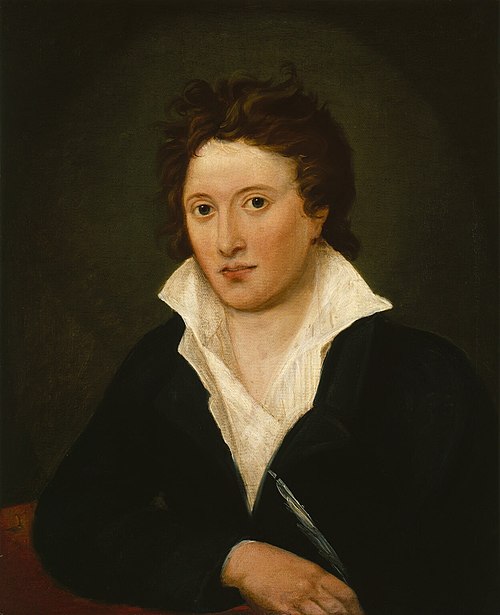
Percy Bysshe Shelley (1819, Amelia Curran)
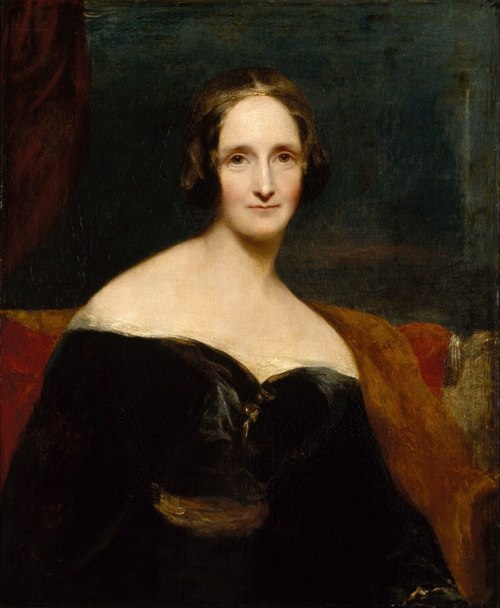
Mary Shelley by Richard Rothwell (1839–40)
Mary Wollstonecraft Shelley was an English novelist who is best known for writing the Gothic novel Frankenstein; or, The Modern Prometheus (1818), which is considered an early example of science fiction. She also edited and promoted the works of her husband, the Romantic poet and philosopher Percy Bysshe Shelley. Her father was the political philosopher William Godwin and her mother was the philosopher and women's rights advocate Mary Wollstonecraft.
Richard Rothwell's portrait of Shelley was shown at the Royal Academy in 1840, accompanied by lines from Percy Shelley's poem The Revolt of Islam calling her a "child of love and light".
Page from William Godwin's journal recording "Birth of Mary, 20 minutes after 11 at night" (left column, fourth row)
The Polygon (at left) in Somers Town, London, between Camden Town and St Pancras, where Mary Godwin was born and spent her earliest years
Percy Bysshe Shelley was inspired by the radicalism of Godwin's Political Justice (1793). When the poet Robert Southey met Shelley, he felt as if he were seeing himself from the 1790s. (Portrait by Amelia Curran, 1819.)