Minbar
Videos
A minbar is a pulpit in a mosque where the imam stands to deliver sermons. It is also used in other similar contexts, such as in a Husayniyya, where the speaker sits and lectures the congregation.
Ottoman-era minbar of the Molla Çelebi Mosque in Istanbul.

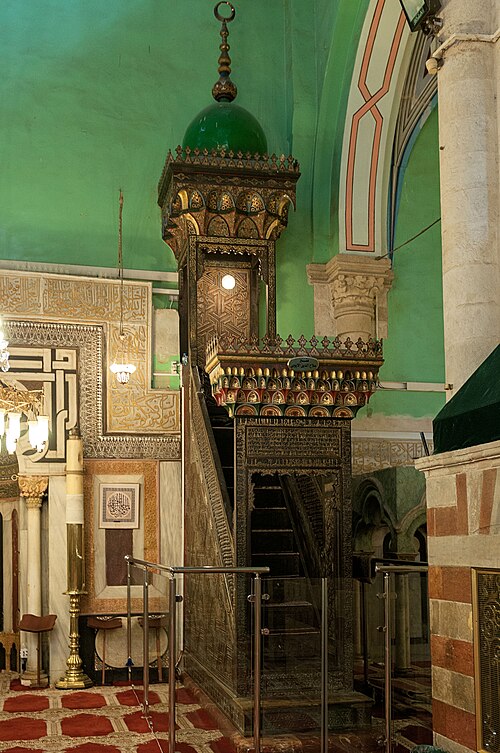
The Fatimid minbar in the Ibrahimi Mosque in Hebron, commissioned in 1091
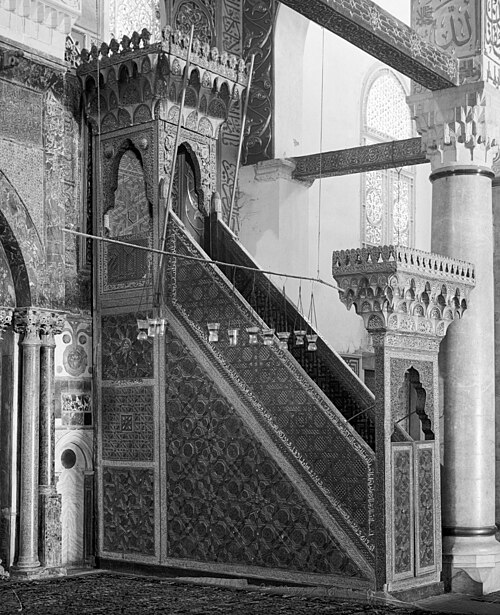
The Minbar of Saladin in the al-Aqsa mosque, Jerusalem (photograph from 1930s). The minbar was built in wood and commissioned by Nur al-Din in 1168–69, then installed in the mosque by Saladin in 1187.

Details of geometric motifs and inlay work on the Mamluk-era Minbar of al-Ghamri (c. 1451) at the Khanqah of Sultan Barsbay, Cairo
Shrine of Husayn's Head
Videos
The Shrine of Husayn's Head was a shrine built by the Fatimids on a hilltop adjacent to Ascalon that was reputed to have held the head of Husayn ibn Ali between c. 906 CE and 1153 CE. It was described

Shrine of Husayn's Head in 1943

The shrine during the annual festival

The minbar, today in the Ibrahimi Mosque, contains inscriptions describing the construction of the shrine
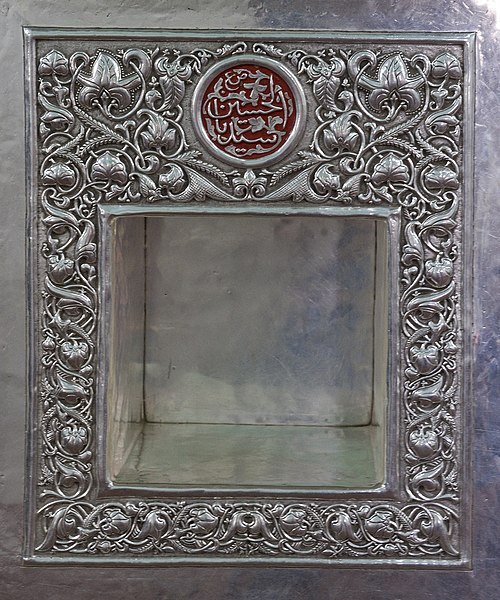
Niche for Husayn's head at the Umayyad mosque in Damascus