Minimalism
Videos
Minimalism is an art movement that emphasizes reducing art to its essentials, focusing on the object itself and the viewer's experience, with as little mediation from the artist as possible. It emerge

DonaldֹJudd IMJ

SANAA, Zollverein School of Management and Design, Essen

Kazimir Malevich, 1915, Black Suprematic Square, oil on linen canvas, 79.5 x 79.5 cm, Tretyakov Gallery, Moscow

A restroom sign with minimalistic characteristics of two genders. The body is also the same shape, just inverted, which further adds to the minimalism employed in the design of the sign.
Abstract expressionism
Videos
Abstract expressionism in the United States emerged as a distinct art movement in the aftermath of World War II and gained mainstream acceptance in the 1950s, a shift from the American social realism
Minimalism
…with as little mediation from the artist as possible. It emerged in the post-World War II era in Western art, and is often interpreted as a reaction to abstract expressionism and modernism. Prominent visual artists associated with minimalism include Donald Judd, Agnes Martin, Dan Flavin, Carl Andre, Robert Morris, Anne Truitt…
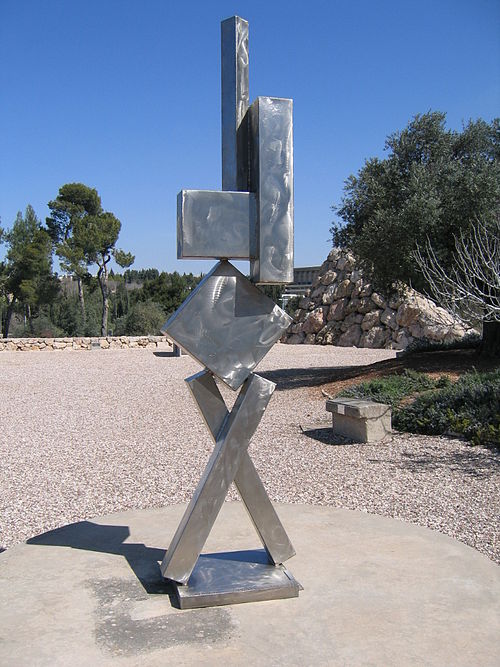
David Smith, Cubi VI (1963), Israel Museum, Jerusalem. David Smith was one of the most influential American sculptors of the 20th century.

Barnett Newman, Onement 1, 1948. During the 1940s Barnett Newman wrote several articles about the new American painting.

Richard Pousette-Dart, Symphony No. 1, The Transcendental, 1941–42

Arshile Gorky, The Liver Is the Cock's Comb (1944), oil on canvas, 731⁄4 × 98" (186 × 249 cm) Albright–Knox Art Gallery, Buffalo, New York. Gorky was an Armenian-born American painter who had a seminal influence on abstract expressionism. De Kooning said: "I met a lot of artists — but then I met Gorky. [...] He had an extraordinary gift for hitting the nail on the head; remarkable. So I immediately attached myself to him and we became very good friends."