Ministerialis
Videos
The ministeriales were a legally unfree but socially elite class of knights, administrators, and officials in the High Middle Ages in the Holy Roman Empire, drawn from a mix of servile origins, free c
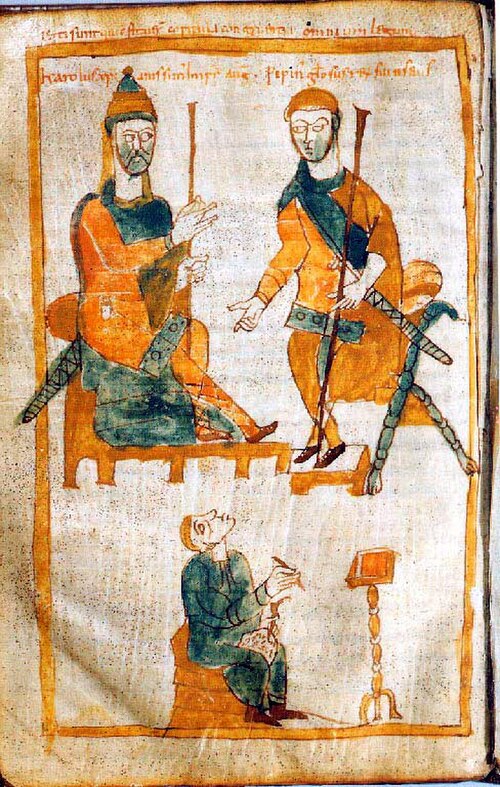
Charlemagne, Pippin, and a ministerial clerk; a 10th-century copy of the original

The fortress of Hohensalzburg, overlooking Salzburg, Austria, was run by a ministerial castellan

Portrait of the famous ministerial Ulrich von Liechtenstein (1200–1275) from the Codex Manesse
Serfdom
Videos
Serfdom was a condition of debt bondage and indentured servitude with similarities to and differences from slavery. It developed during late antiquity and the Early Middle Ages in Europe and lasted in
Ministerialis
…running of the government in his work De ordine palatii. There he praises the great merits of his imperial staff, made up of household servii proprii (serfs) who were the first ministerials authoritatively recorded. His letters specify that not only were they considered exceptional by their superiors, but…

Punishment with a knout. Whipping was a common punishment for Russian serfs.

Reeve and serfs in feudal England, c. 1310

Russian peasants reading the Emancipation Manifesto, an 1873 painting by Grigory Myasoyedov

The proclamation by count Josip Jelačić abolishing serfdom in the Kingdom of Croatia