Misbaha
Videos
A misbaha, subḥa, mesbah, tusbaḥ, tasbīḥ, or tespih is a set of prayer beads often used by Muslims for the tasbih, the recitation of prayers, as well as to glorify Allah. It resembles the japamala use

A black misbaha
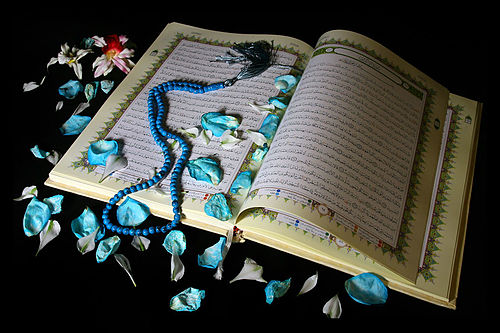
Qurʾan and Misbaha

Misbaha, dated 1909 (1327 AH)

Colorful Misbaha
Rudraksha
Videos
A rudraksha are the dried stones or seeds of the genus Elaeocarpus specifically, Elaeocarpus ganitrus. These seeds are used as prayer beads for Hindus and Buddhists. When they are ripe, rudraksha ston

Rudraksha beads are the dried stones of the fruit of the Elaeocarpus ganitrus tree

Rudraksha tree, Elaeocarpus ganitrus

Ripe rudraksha fruits displaying their typical blue colour

5-faced (panchamukha) rudraksha stone with the lines delineating its faces labelled