Mithraism
Videos
Mithraism, also known as the Mithraic mysteries or the Cult of Mithras, was a Roman mystery religion focused on the god Mithras. Although inspired by Iranian worship of the Zoroastrian divinity Mithra
Mithras killing the bull, c. 150 CE; Louvre-Lens


Double-faced Mithraic relief. Fiano Romano (Rome), 2nd to 3rd century CE, Louvre Museum.

Rock-born Mithras and Mithraic artifacts, Baths of Diocletian, Rome

A bas-relief of the tauroctony of the mysteries, Metz, France
Mithraeum
Videos
A Mithraeum, sometimes spelled Mithreum and Mithraion, is a temple erected in classical antiquity by the worshippers of Mithras. Most Mithraea can be dated between 100 BC and 300 AD, mostly in the Rom
Mithraism
…of seven grades of initiation and communal ritual meals. Initiates called themselves syndexioi, those "united by the handshake". They met in dedicated mithraea (singular mithraeum), underground temples, otherwise known as caves, that survive in large numbers. The cult appears to have had its centre in Rome…
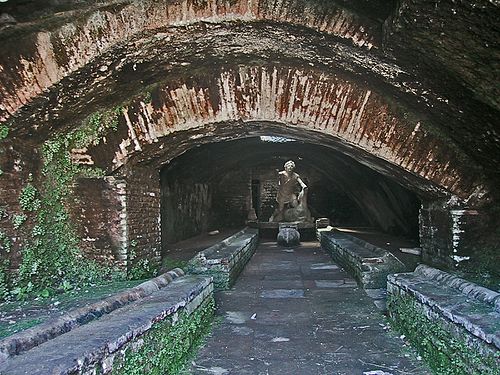
A Mithraeum found in the ruins of Ostia Antica, Italy

Mithraeum in Jajce, Bosnia and Herzegovina, renowned as one of the best preserved in-situ in Europe

A modern reimagining of a Mithraeum at the Museum Orientalis, Netherlands

Finds from a Mithraeum in Stockstadt, Germany