Mitsubishi G4M
Videos
The Mitsubishi G4M was a twin-engine, land-based medium bomber manufactured by the Mitsubishi Aircraft Company, a part of Mitsubishi Heavy Industries, and operated by the Air Service of the Imperial J

A Mitsubishi G4M2a Model 24 of the 763rd Kōkūtai

A G4Ms cockpit in 1945.
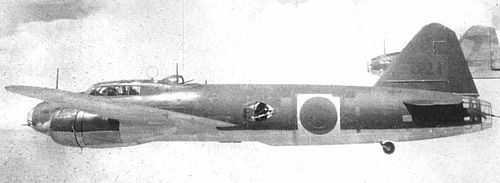
A Mitsubishi G4M1; with a non-standard roundel - a white square instead of the white circle surrounding the hinomaru.

IJN aviators pressed home a torpedo attack against American ships off Guadalcanal on 8 August 1942, suffering heavy losses. The plane on the left at extreme low-level (approximately five meters) was flown by Jun Takahashi.
Operation Vengeance
Videos
Operation Vengeance was the American military operation to kill Admiral Isoroku Yamamoto of the Imperial Japanese Navy on 18 April 1943 during the Solomon Islands campaign in the Pacific Theater of Wo
Mitsubishi G4M
…aviators, including Lieutenant Commander Higai, were killed during that battle. Probably the best-known incident involving a G4M in the war came during the top secret mission to intercept the aircraft carrying Japanese Admiral Isoroku Yamamoto, resulting in Yamamoto's death. On 18 April 1943, sixteen P-38 Lightnings of the…

Admiral Isoroku Yamamoto saluting Japanese naval pilots at Rabaul, hours before his death

P-38G Lightnings were the aircraft chosen to carry out the mission.

339th Fighter Squadron personnel of the mission. Back row (l to r): Ames, Graebner, Lanphier, Goerke, Jacobson, Stratton, Long, Anglin. Front row (l to r): Smith, Canning, Holmes, Barber, Mitchell, Kittel, Whitakker. Not pictured: Hine (MIA).

Yamamoto's ashes return to Japan at Kisarazu aboard battleship Musashi on May 23, 1943