Monday
Videos
Monday is the day of the week that takes place between Sunday and Tuesday. According to the International Organization for Standardization's ISO 8601 standard, it is the first day of the week.
Galileo's 1616 drawings of the Moon and its phases. Monday is named after the Moon in many languages.


A depiction of Máni, the personified moon, and his sister Sól, the personified sun, from Norse mythology (1895) by Lorenz Frølich

This postcard, sent in 1907 and captioned "Monday Morning in N. Y. City", reflects the tradition of Monday as a day for washing clothes.
Week
Videos
A week is a unit of time equal to seven days. It is the standard calendrical period between a day and a month in most parts of the world. There are just over 52 weeks in a year, or on average 4+1⁄3 we
Monday
…Monday is the day of the week that takes place between Sunday and Tuesday. According to the International Organization for Standardization's ISO 8601 standard, it is the first day…

An Italian cameo bracelet representing the days of the week by their eponymous deities (mid-19th century, Walters Art Museum)

Circular diagrams showing the division of the day and of the week, from a Carolingian ms. (Clm 14456 fol. 71r) of St. Emmeram Abbey. The week is divided into seven days, and each day into 24 hours, 96 puncta (quarter-hours), 240 minuta (tenths of an hour) and 960 momenta (40th parts of an hour).

Soviet calendar, 1930. Five colors of five-day work week repeat.
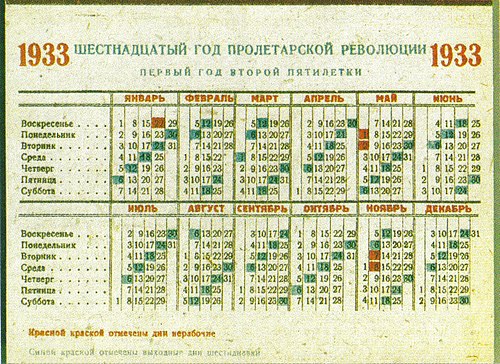
Soviet calendar, 1933. Rest day of six-day work week in blue.