Money
Videos
Money is any item or verifiable record that is generally accepted as payment for goods and services and repayment of debts, such as taxes, in a particular country or socio-economic context. The primar

Euro banknotes and coins
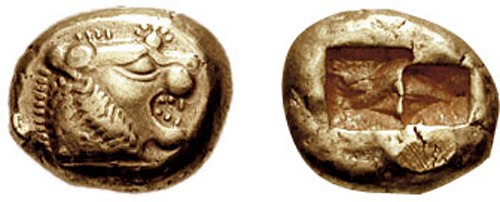
A 640 BC one-third stater electrum coin from Lydia. According to Herodotus, the Lydians were the first people to introduce the use of gold and silver coins. It is thought by modern scholars that these first stamped coins were minted around 650 to 600 BC.

Egyptian gold stater of Nectanebo II: reverse with hieroglyphs nfr-nb, minted in Egypt around 360 BC.

Song Dynasty Jiaozi, the world's earliest paper money
Legal tender
Videos
Legal tender is a form of money that the law recognises as valid for the discharge of a monetary debt in a jurisdiction. What constitutes legal tender varies between jurisdictions.
Money
…fiat money without use value. Its value is consequently derived by social convention, having been declared by a government or regulatory entity to be legal tender; that is, it must be accepted as a form of payment within the boundaries of the country, for "all debts, public and private", in the case of the United…

Detail of the obverse of a Series 1950 United States ten-dollar bill, showing the phrase "This note is legal tender for all debts, public and private, and is redeemable in lawful money at the United States Treasury, or at any Federal Reserve Bank." This phrase was subsequently shortened in later issues to "This note is legal tender for all debts, public and private."

Indian rupees were stamped with Government of Pakistan to be used as legal tenders in the new state of Pakistan in 1947.