Mongolian People's Republic
Videos
The Mongolian People's Republic was the Mongolian communist state that existed from 1924 to 1992 that self-designated first as a people's democratic state and later as a socialist state. The Mongolian

Khorloogiin Choibalsan (left), who led the MPR from 1939 to 1952, and Georgy Zhukov at Khalkhin Gol in 1939

The Government Palace, built in 1951, in Sükhbaatar Square during the 1970s

Yurt quarter in Ulaanbaatar in 1972

Darkhan-1 Railway Station in 1985
Battles of Khalkhin Gol
Videos
The Battles of Khalkhin Gol, known in Japan as the Nomonhan Incident after Nomonhan Burd Obo, were the decisive engagements of the undeclared Soviet–Japanese border conflicts which involved the Soviet
Mongolian People's Republic
…Stalinist repressions from 1937 to 1939 that resulted in the deaths of over 20,000 people. The MPR's army fought alongside the Soviets in the 1939 Battles of Khalkhin Gol against Japan, and its independence was formally recognized by China after a 1945 referendum. After Choibalsan's death, Yumjaagiin Tsedenbal came to…

Japanese infantrymen near wrecked Soviet armored vehicles, July 1939

Mongolian cavalry in the Khalkhin Gol (1939)

Mongolian troops fight against a Japanese counterattack on the western beach of the river Khalkhin Gol, 1939
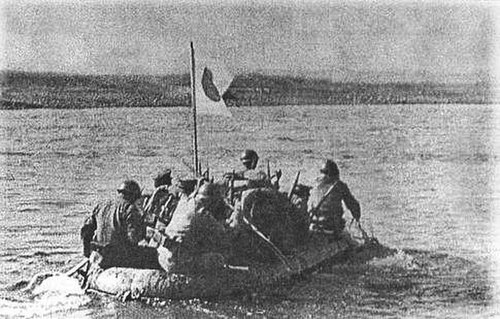
Japanese soldiers cross the Khalkhin Gol