Monopoly price
Videos
In microeconomics, a monopoly price is set by a monopoly. A monopoly occurs when a firm lacks any viable competition and is the sole producer of the industry's product. Because a monopoly faces no com

Reduction in price increases the quantity demanded, but reduces payments by those who would be willing to pay a higher price: MR < P

Diminishing marginal product ensures the rise in cost from producing an additional item (marginal cost) is always greater than the average variable (controllable) cost at that level of production. Since some costs cannot be controlled in the short run, the variable (controllable) costs will always be lower than the total costs in the short run.

A monopolist will set a price and production quantity where MC=MR, such that MR is always below the monopoly price set. A competitive firm's MR is the price it gets for its product, and will have Price=MC.
Monopoly
Videos
A monopoly is a market in which one person or company is the only supplier of a particular good or service. A monopoly is characterized by a lack of economic competition to produce a particular thing,
Monopoly price
…In microeconomics, a monopoly price is set by a monopoly. A monopoly occurs when a firm lacks any viable competition and is the sole producer of the industry's product. Because a monopoly faces no competition…
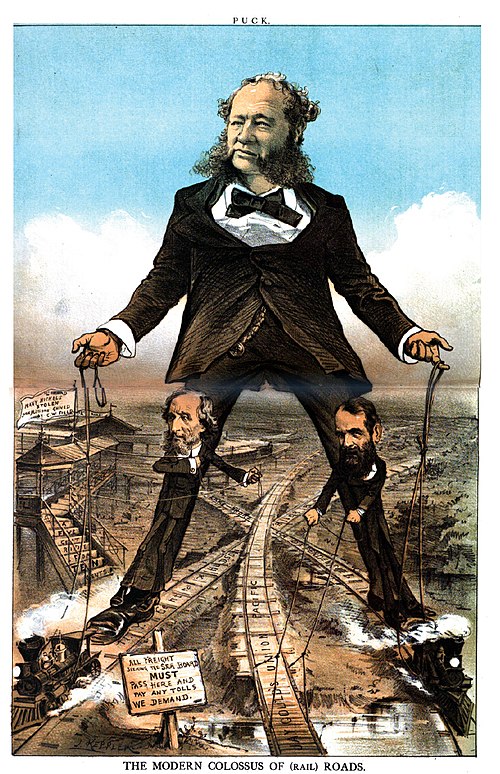
This 1879 anti-monopoly cartoon depicts powerful railroad barons controlling the entire rail system.
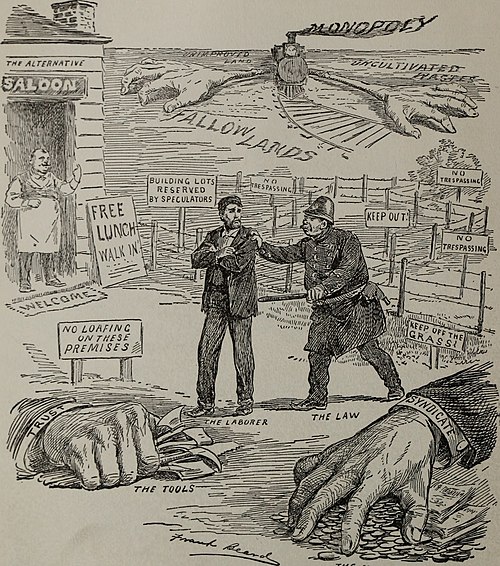
A 1902 anti-monopoly cartoon depicts the challenges that monopolies may create for workers.