Morrison Formation
Videos
The Morrison Formation is a distinctive sequence of Upper Jurassic sedimentary rock found in the western United States which has been the most fertile source of dinosaur fossils in North America. It i

The distinctive banding of the Morrison Formation, a group of rock layers that occur throughout Dinosaur National Monument and the source of fossils like those found at the Dinosaur Quarry
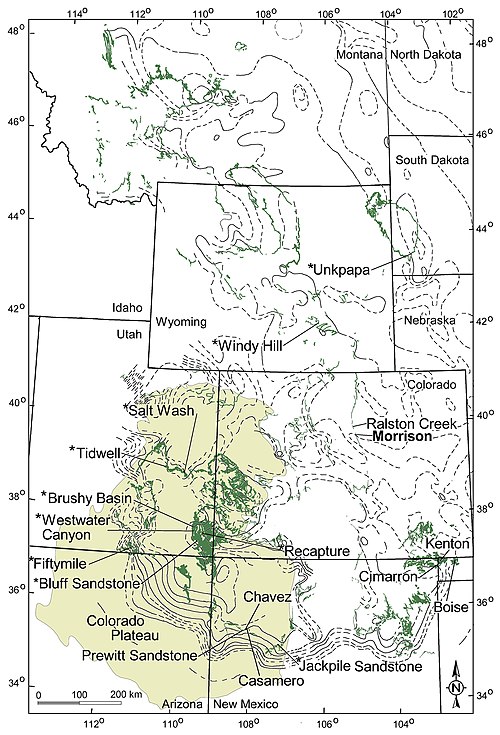
Stratotypes for members of the Morrison Formation

Type locality of the Salt Wash Member near White Wash, Grand County, Utah. The Morrison Formation is underlain by the brick-red Summerville Formation.

Brushy Basin Member showing the purple and red colors of paleosols (ancient soils). East side of the San Rafael Swell, Emery County, Utah.
Dinosaur National Monument
Videos
Dinosaur National Monument is an American national monument located on the southeast flank of the Uinta Mountains on the border between Colorado and Utah at the confluence of the Green and Yampa river
Morrison Formation
…organism for studies of paleobiology in basal theropods. The rare theropods Stokesosaurus and Marshosaurus specimens were also first discovered here. Dinosaur National Monument, Utah: First excavated by Earl Douglas working for the Carnegie Museum in 1909 with the purpose of finding sauropods from the Morrison Formation for…

A dinosaur skull embedded in rock at Dinosaur National Monument

Quarry Visitor Center, March 2012

Dinosaur National Monument entrance

Split Mountain Green River