Morse code
Videos
Morse code is a telecommunications method which encodes text characters as standardized sequences of two different signal durations, called dots and dashes, or dits and dahs. It is named after Samuel
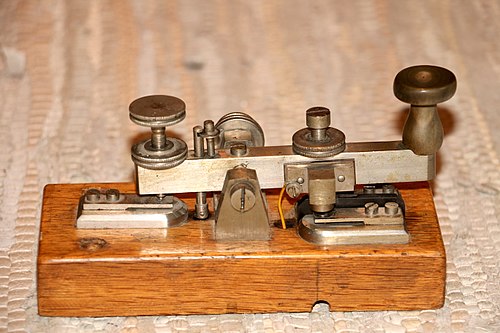
This Morse key was originally used by Gotthard railway, later by a shortwave radio amateur.

Single needle telegraph instrument

Telegraph key and sounder; the signal is "on" when the knob is pressed, and "off" when it is released, length and timing of the dits and dahs are entirely controlled by the telegraphist

Morse code receiver that records on paper tape
Electrical telegraph
Videos
Electrical telegraphy is point-to-point distance communicating via sending electric signals over wire, a system primarily used from the 1840s until the late 20th century. It was the first electrical t
Morse code
…called dots and dashes, or dits and dahs. It is named after Samuel Morse, one of several developers of the system. Morse's preliminary proposal for a telegraph code was replaced by an alphabet-based code developed by Alfred Vail, the engineer working with Morse. Vail's version was used for commercial telegraphy…

Cooke and Wheatstone's five-needle telegraph from 1837

Morse telegraph

Hughes telegraph, an early (1855) teleprinter built by Siemens and Halske

Sömmering's electric telegraph in 1809