Moss
Videos
Mosses are small, non-vascular flowerless plants in the taxonomic division Bryophyta sensu stricto. Bryophyta sensu lato may also refer to the parent group, bryophytes, which comprises liverworts, mos

Tionesta ac moss 2
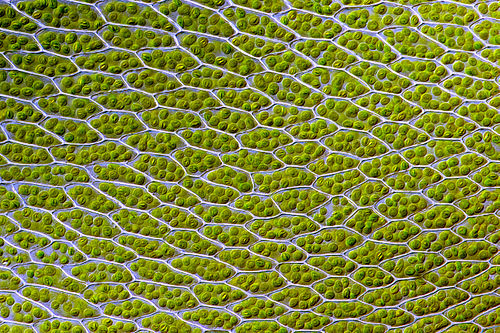
Chloroplasts (green discs) and accumulated starch granules in cells of Rosulabryum capillare

Moss leaf under microscope, showing gemmae and a hair point (40×)

A patch of moss showing both gametophytes (the low, leaf-like forms) and sporophytes (the tall, stalk-like forms)
Lichen
Videos
A lichen is a hybrid colony of algae or cyanobacteria living symbiotically among filaments of multiple fungus species, along with bacteria embedded in the cortex, or "skin", in a mutualistic relations
Moss
…in the world, can grow to 60 cm (24 in) in height. There are approximately 12,000 species. Mosses are commonly confused with liverworts, hornworts and lichens. Although often described as non-vascular plants, many mosses have advanced vascular systems. Like liverworts and hornworts, the haploid gametophyte…

Letharia vulpina, wolf lichen, grows like a multiple-branched tuft or leafless mini-shrub, so it has a fruticose growth form.

Flavoparmelia caperata has leaf-like structures, so it is foliose.

Caloplaca marina grows like an orange crust coating the rock, so it is crustose.

Variospora thallincola grows like a crust, and in a pattern that radiates outward from the center, so it has a crustose placodioid growth form.