Mount Olympus
Videos
Mount Olympus is an extensive massif near the Thermaic Gulf of the Aegean Sea, in Greece, located on the border between Thessaly and Macedonia, between the regional units of Larissa and Pieria, about

Mount Olympus's peaks in daytime

Mytikas: the highest peak

Stratospheric view of Mount Olympus

Muses' Plateau, with Stefani (the throne of Zeus) in the background
Massif
Videos
A massif is a principal mountain mass, such as a compact portion of a mountain range, containing one or more summits. In mountaineering literature, massif is frequently used to denote the main mass of
Mount Olympus
…Mount Olympus (, Greek: Όλυμπος, romanized: Ólympos, IPA: ) is an extensive massif near the Thermaic Gulf of the Aegean Sea, in Greece, located on the border between Thessaly and Macedonia, between the regional units of Larissa and…

Aerial view of Mont Blanc massif, an example of a massif and also the highest summit in the Alps
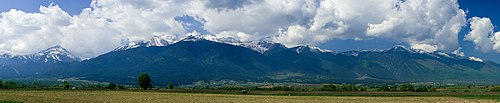
Panorama of Pirin Mountain massif, Bulgaria

Gran Sasso d'Italia massif seen from an airplane. Part of the Apennine Mountains, it is located in the Abruzzo region of Italy.