Mountains and Sea
Videos
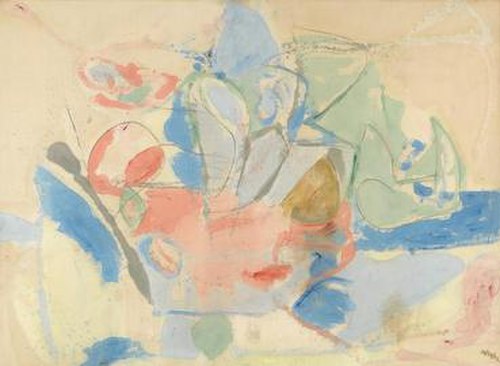
Mountains and Sea is a 1952 painting by American abstract expressionist painter Helen Frankenthaler. Painted when Frankenthaler was 23 years old, it was her first professionally exhibited work. Though
Lyrical abstraction
Videos
Lyrical abstraction arose from either of two related but distinct trends in Post-war Modernist painting:
John Hoyland, Lebanon, 2007. John Hoyland (1934–2011), was one of England's leading abstract painters.


Ronnie Landfield, For William Blake 1968, a/c, 110 x 256 inches, exhibited: Tower 49, NYC, January 3, 2002–November 15, 2002. His work was included in the Lyrical Abstraction exhibitions at the Whitney Museum in 1970, the Sheldon Museum in 1993 and at the Boca Raton Museum in 2009.

Thornton Willis, Red Wall, 1969, acrylic on canvas, 103 in × 108 in (260 cm × 270 cm).
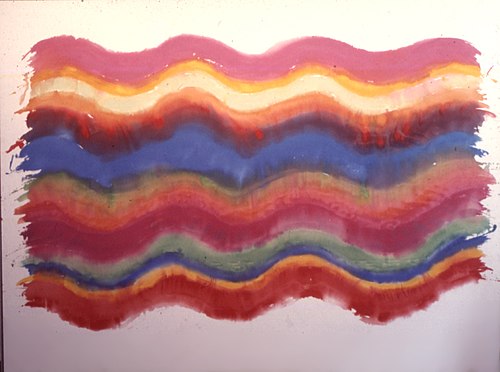
Pat Lipsky, Spiked Red, 1970. Her work was included in the Lyrical Abstraction exhibition at the Whitney Museum in 1970 and at the Boca Raton Museum in 2009.