Multilingualism
Videos
Multilingualism is the use of more than one language, either by an individual speaker or by a group of speakers. When the languages are only two, it is usually called bilingualism. It is believed that

The frontage of the Constitutional Court of South Africa, with text written in eleven of South Africa's twelve official languages
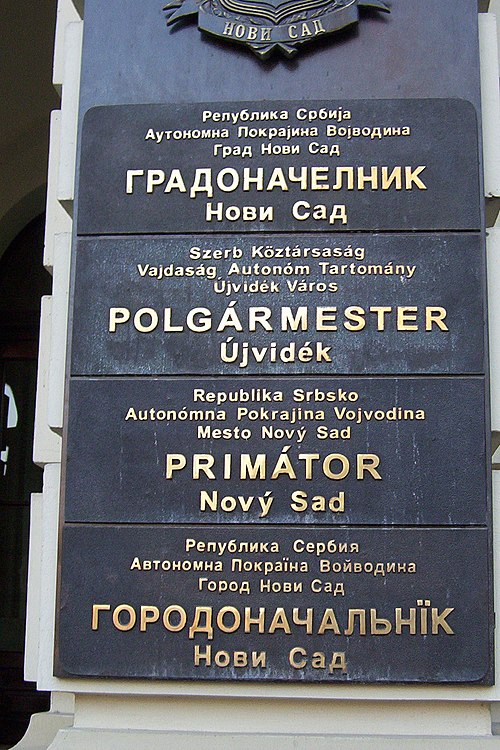
A multilingual sign outside the mayor's office in Novi Sad, Serbia, written in the four official languages of the city: Serbian, Hungarian, Slovak, and Pannonian Rusyn

A stenciled danger sign in Singapore written in English, Mandarin, Tamil, and Malay (the four official languages of Singapore)

A bilingual "no trespassing" sign at a construction site in Helsinki, Finland (upper text in Finnish, lower text in Swedish)
Giuseppe Gasparo Mezzofanti
Videos
Giuseppe Gasparo Mezzofanti was an Italian cardinal known for being a hyperpolyglot. He spoke 38 to 50 languages.
Multilingualism
…Erard suggests eleven or more, while Usman W. Chohan suggests six to eight (depending on proficiency) or more—are sometimes classed as hyperpolyglots. Giuseppe Caspar Mezzofanti, for example, was an Italian priest reputed to have spoken anywhere from 30 to 72 languages. The term savant, in a general sense, may refer to any…

Giuseppe Caspar Mezzofanti