Muses
Videos
In ancient Greek religion and mythology, the Muses were the inspirational goddesses of literature, science, and the arts. They were considered the source of the knowledge embodied in the poetry, lyric
Muse, perhaps Clio, reading a scroll (Attic red-figure lekythos, Boeotia, c. 430 BC)


Print of Clio, made in the 16th–17th century. Preserved in the Ghent University Library.
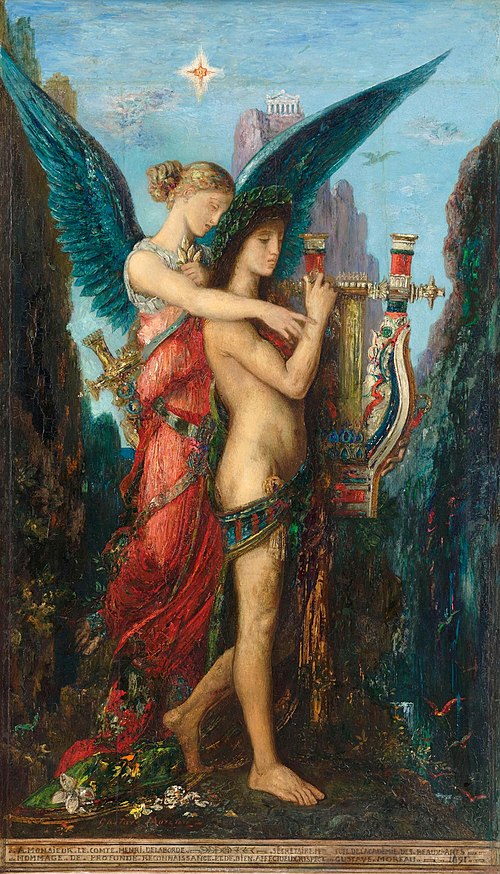
Gustave Moreau: Hesiod and the Muse (1891), Musée d'Orsay, Paris
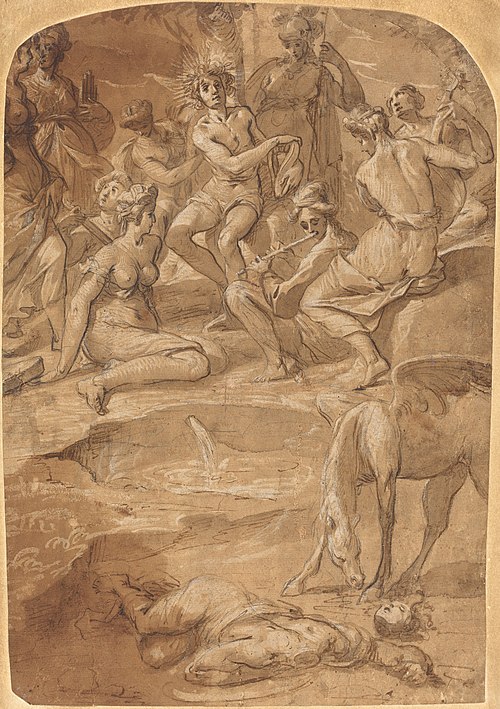
Apollo and the Muses on Mount Parnassus, c. 1650, by Johann Christoph Storer. Held at National Gallery of Art
Euterpe
Videos
Euterpe was one of the Muses in Greek mythology, presiding over music. In late Classical times, she was named muse of lyric poetry. She has been called "Giver of delight" by ancient poets.
Muses
…region, but from the Classical period the number of Muses was standardized to nine, and their names were generally given as Calliope, Clio, Polyhymnia, Euterpe, Terpsichore, Erato, Melpomene, Thalia, and Urania. In modern figurative usage, a muse is a person who serves as someone's source of artistic inspiration…

Euterpe on an antique fresco from Pompeii

Euterpe Pérez Galdós

Rome mint. Laureate head of Apollo right; two crossed tibiae behind / Euterpe, the Muse of Music and Lyric Poetry, wearing long flowing tunic and peplum, standing right, supporting her head with her left hand by resting her elbow on column, and holding two tibiae in right hand; Q • POMPONI downwards to left, MVSA downwards to right. Quintus Pomponius Musa

Roman mosaic of Euterpe, 2nd century