Muslin
Videos
Muslin is a cotton fabric of plain weave. It is made in a wide range of weights from delicate sheers to coarse sheeting.
Woman's white muslin dress with tiered flounces, Europe, c. 1855

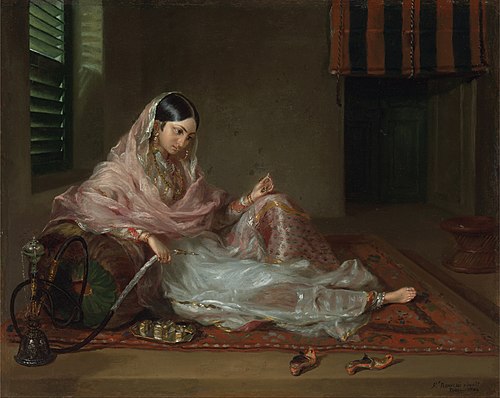
A woman in Bengal wearing Dhaka muslin, titled Muslim Lady Reclining by Francesco Renaldi (1789)

In 2015, the diaphanous quality of muslin woven at Sonargaon in the 18th century is being tested in Kolkata.

A Dhaka muslin sari, produced by Bangladesh Handloom Board under the project "Bangladesh Muslin Golden Heritage of Technology Reviving the Technology of Muslin Golden Heritage"
Plain weave
Videos
Plain weave is the most basic of three fundamental types of textile weaves. It is strong and hard-wearing, and is used for fashion and furnishing fabrics. Fabrics with a plain weave are generally stro
Muslin
…Muslin () is a cotton fabric of plain weave. It is made in a wide range of weights from delicate sheers to coarse sheeting. Muslin was produced in different regions of the Indian subcontinent…

Warp and weft in a plain tabby weave, showing the reversals of the weft.

Swedish weaving