Mut
Videos
Mut was a mother goddess worshipped in ancient Egypt. Her name means mother in the ancient Egyptian language. Mut had many different aspects and attributes that changed and evolved greatly over the th
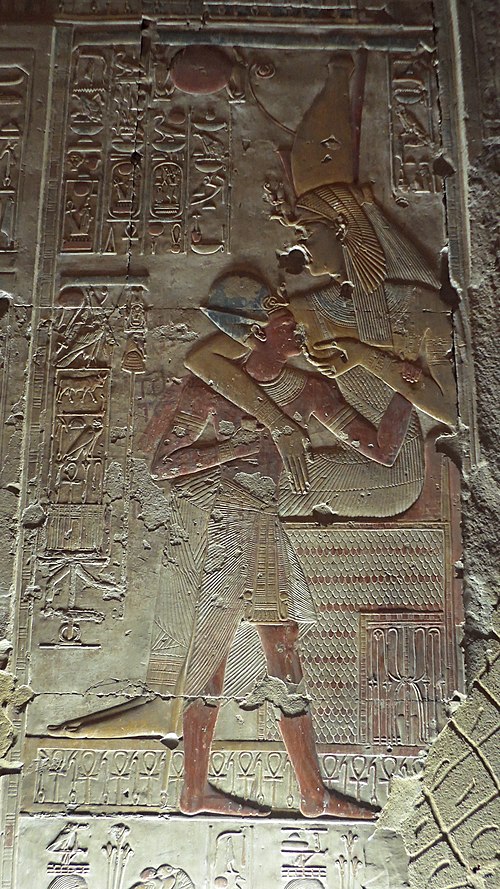
Mut nursing the pharaoh, Seti I, in relief from the second hypostyle hall of Seti's mortuary temple in Abydos.

Nineteenth dynasty statue of Mut, part of a double statue, c. 1279–1213 BC, Luxor Museum

Mut's name could be written with the phallus glyph 𓂸𓏏, and here the goddess herself was even portrayed ithyphallically.
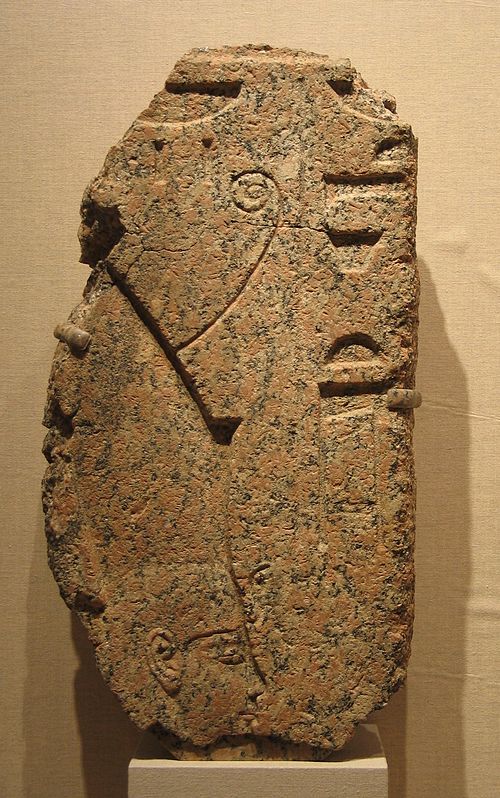
Relief of the Goddess Mut, c. 1336–1213 BC, 79.120, Brooklyn Museum
Amun
Videos
Amun was a major ancient Egyptian deity who appears as a member of the Hermopolitan Ogdoad. Amun was attested from the Old Kingdom together with his wife Amunet. His oracle in Siwa Oasis, located in W
Mut
…Mut was sometimes said to have given birth to the world through parthenogenesis, but more often she was said to have a husband, the solar creator god Amun-Ra. Although Mut was believed by her followers to be the mother of everything in the world, she was particularly associated as the mother of the lunar…

Amun depicted with Seti I in the temple and Chapel at Abydos

Min in a relief from the reign of Thutmose III from Deir el-Bahari.

Ka-mut-ef, "Bull of His Mother" as a ram-headed lion in the Avenue of Sphinxes at Karnak Temple

Hieroglyphs on the backpillar of Amenhotep III's statue. There are two places where Akhenaten's agents erased the name Amun, later restored on a deeper surface. The British Museum, London