Nacre
Videos
Nacre, also known as mother-of-pearl, is an organic–inorganic composite material produced by some molluscs as an inner shell layer. It is also the material of which pearls are composed. It is strong,

The iridescent nacre inside a nautilus shell

Nacreous shell worked into a decorative object
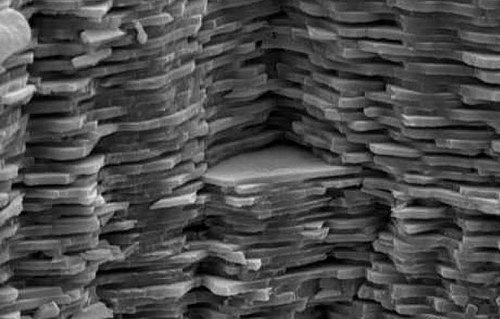
Electron microscopy image of a fractured surface of nacre

Fossil nautiloid shell with original iridescent nacre in fossiliferous asphaltic limestone, Oklahoma. Dated to the late Middle Pennsylvanian, which makes it by far the oldest deposit in the world with aragonitic nacreous shelly fossils.
Iridescence
Videos
Iridescence is the phenomenon of certain surfaces that appear gradually to change colour as the angle of view or the angle of illumination changes. Iridescence is caused by wave interference of light
Nacre
…composite material produced by some molluscs as an inner shell layer. It is also the material of which pearls are composed. It is strong, resilient, and iridescent. Nacre is found in some of the most ancient lineages of bivalves, gastropods, and cephalopods. However, the inner layer in the great majority of mollusc…

Iridescence in soap bubbles

Fuel on top of water creates a thin film, which interferes with the light, producing different colours. The different bands represent different thicknesses in the film. This phenomenon is known as thin-film interference.

An iridescent biofilm on the surface of a fish tank diffracts the reflected light, displaying the entire spectrum of colours. Red is seen from longer angles of incidence than blue.

The pearlescent shell of a black-lip pearl oyster