Naginata
Videos
The naginata is a polearm and one of several varieties of traditionally made Japanese blades. Naginata were originally used by the samurai class of feudal Japan, as well as by ashigaru and sōhei. The

A naginata blade forged by Osafune Katsumitsu. Muromachi period, 1503, Tokyo National Museum

Mounting for naginata, Edo period

Tomoe Gozen, an "onna-musha", wields a naginata on horseback.
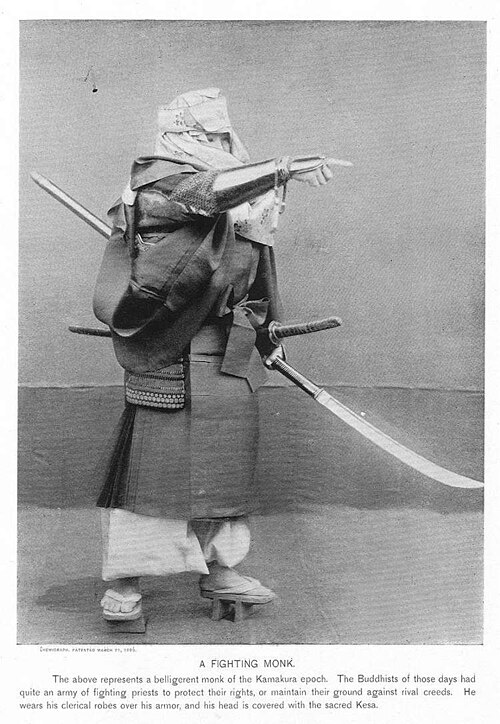
A Meiji-era depiction of a sōhei (warrior monk) with a naginata
Katana
Videos
A katana is a Japanese sword characterized by a curved, single-edged blade with a circular or squared guard and long grip to accommodate two hands. Developed later than the tachi, it was used by samur

A katana modified from a tachi forged by Motoshige. Bizen Osafune school influenced by the Sōshū school. 14th century, Nanboku-chō period. Important Cultural Property. Tokyo National Museum

Mei (signature) and Nakago (tang) of an Edo period katana

A Sōshū school katana modified from a tachi forged by Masamune. As it was owned by Ishida Mitsunari, it was commonly called Ishida Masamune. Important Cultural Property. Tokyo National Museum

A Sōshū school katana modified from a tachi, Kiriha Sadamune, forged by Sadamune, son of Masamune. 14th century, Kamakura period. Important Cultural Property. Tokyo National Museum