Namaste
Videos
Namastē, sometimes called namaskāra and namaskāram, is a customary Hindu manner of respectfully greeting and honouring a person or group, used at any time of day. It is used by people of the Hindu, Bu
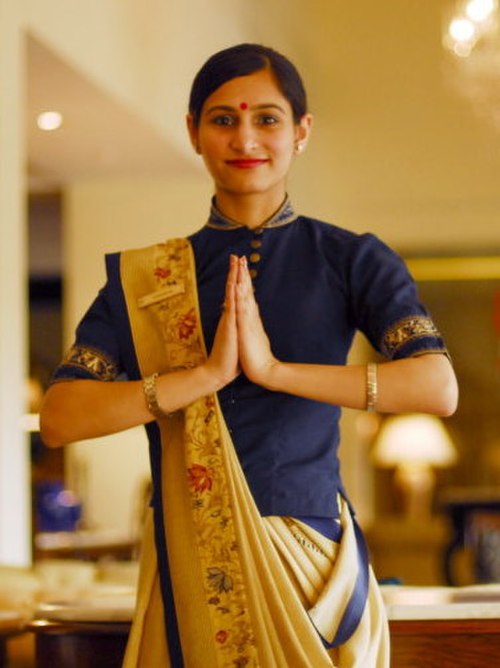
Pressing hands together with a smile to greet namastē – a common cultural gesture in India

Hindu god Kubēra on the left with a person in Añjali Mudrā (13th century Chennakeshava Temple, Somanathapura, Mysuru, Karnataka).

Entrance pillar relief (Thrichittatt Maha Vishnu Temple, Chengannur, Kerala).

A Hindu man making the Añjali Mudrā
Sanskrit
Videos
Sanskrit is a classical language belonging to the Indo-Aryan branch of the Indo-European languages. It arose in South Asia after its predecessor languages had diffused there from the northwest in the
Namaste
…the chest. This gesture is Añjali Mudrā; the standing posture in modern yoga that incorporates it is praṇāmāsana. Namastē (Namas + tē) is derived from Sanskrit and is a combination of the word namas and the second person dative pronoun in its enclitic form, te. The word namaḥ takes the form namas before the…

Bhagavad Gita 19th century Illustrated Sanskrit Chapter 1.20.21

Sanskrit College 1999 stamp of India
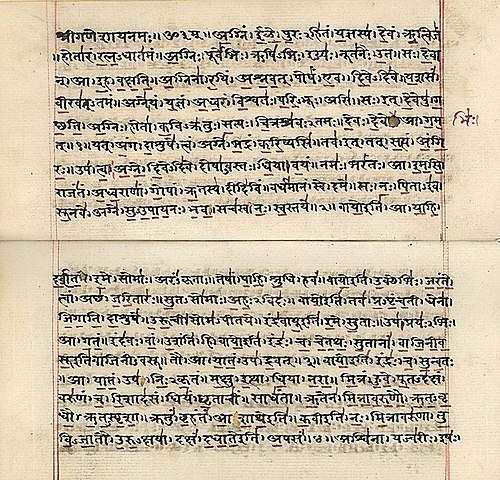
Rigveda (padapatha) manuscript in Devanagari, early 19th century. The red horizontal and vertical lines mark low and high pitch changes for chanting.
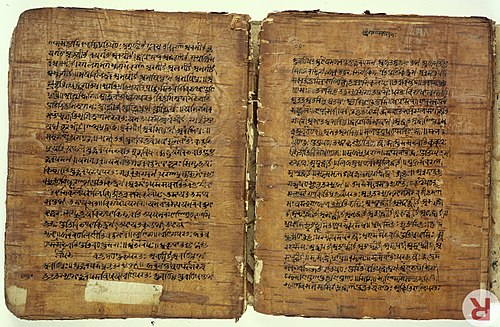
A 17th-century birch bark manuscript of Pāṇini's grammar treatise from Kashmir