Nanotechnology
Videos
Nanotechnology is the manipulation of matter with at least one dimension sized from 1 to 100 nanometers. At this scale, commonly known as the nanoscale, surface area and quantum mechanical effects bec

Fullerene nanogears
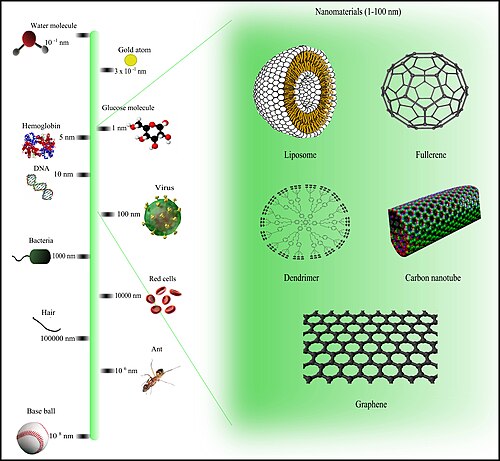
Comparison of nanomaterials sizes
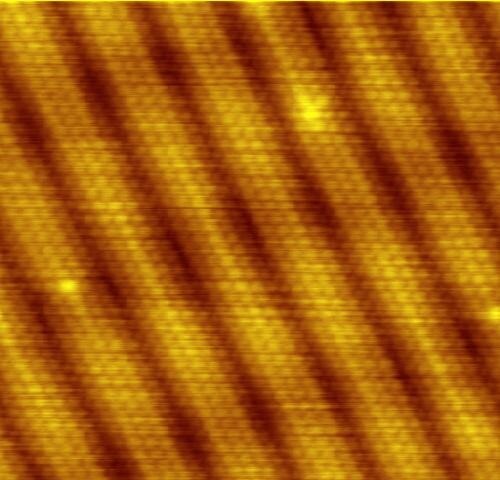
Image of reconstruction on a clean Gold(100) surface, as visualized using scanning tunneling microscopy. The positions of the individual atoms composing the surface are visible.

Graphical representation of a rotaxane, useful as a molecular switch
Richard Feynman
Videos
Richard Phillips Feynman was an American theoretical physicist. He shared the 1965 Nobel Prize in Physics with Julian Schwinger and Shin'ichirō Tomonaga "for their fundamental work in quantum electrod
Nanotechnology
…governments on whether special regulation of nanotechnology is warranted. The concepts that seeded nanotechnology were first discussed in 1959 by physicist Richard Feynman in his talk There's Plenty of Room at the Bottom, in which he described the possibility of synthesis via direct manipulation of atoms. The term…

Feynman c. 1965

MIT yearbook portrait (1939)

Feynman's Los Alamos ID badge

At the 1946 colloquium on the "Super" at the Los Alamos Laboratory. Feynman is in the second row, fourth from left, next to Oppenheimer.