Neanderthal genetics
Videos
Neanderthal genetics testing became possible in the 1990s with advances in ancient DNA analysis. In 2008, the Neanderthal genome project published the full sequence Neanderthal mitochondrial DNA, and
Geneticist at the Max Planck Institute for Evolutionary Anthropology extracting ancient DNA (2005 photograph)

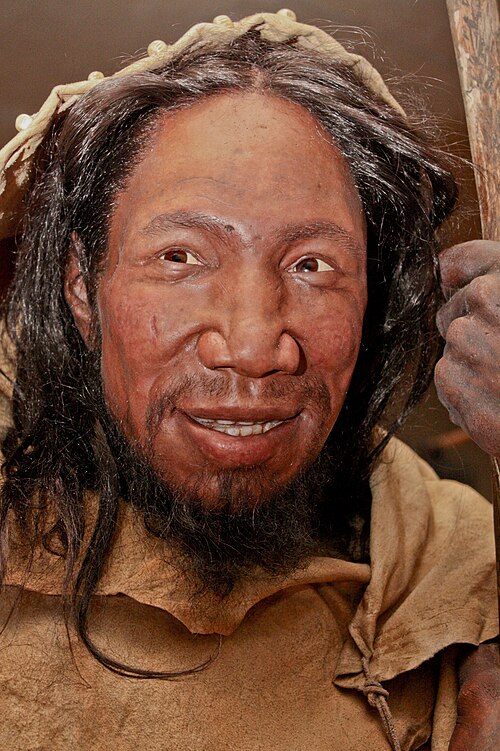
Reconstruction of the upper Palaeolithic human Oase 2 with around 7.3% Neanderthal DNA (from an ancestor 4–6 generations back)
Interbreeding between archaic humans and anatomically modern humans took place during the Middle Paleolithic and early Upper Paleolithic. It has been revealed via genomic sequencing that all modern hu
Svante Pääbo, Nobel Prize laureate and one of the researchers who published the first sequence of the Neanderthal genome.


Le Moustier Neanderthal skull reconstitution, Neues Museum Berlin.

The modern human Oase 2 skull (cast depicted), found in Peştera cu Oase, displays archaic traits due to possible hybridization with Neanderthals.

The Denisovan genome was sequenced from a fragment of the distal phalanx of the fifth finger (replica depicted) found in the Denisova cave.