Neglected and underutilized crop
Neglected and underutilized crops are domesticated plant species used for food, medicine, trading, or cultural practices. They are significant within their local communities but are not widely commodified or studied as part of mainstream agriculture. Such crops may be in declining production. They are considered underutilized in scientific inquiry for their perceived potential to contribute to knowledge regarding nutrition, food security, genetic resistance, or sustainability. Other terms to describe such crops include minor, orphan, underused, local, traditional, alternative, minor, niche, or underdeveloped.
Cherimoya (Annona cherimola) on sale in Cali, Colombia. In left background: domestically produced mangosteen (Garcinia mangostana)
Bambara groundnut (Vigna subterranea) from Buzi district in Mozambique
Landscape with quinoa (Chenopodium quinoa), Cachilaya[clarification needed], Bolivia, Province La Paz, Lake Titicaca seen in background.
Village chief of Boula Téné, [Senegal] Theodore Mada Keita, holds up the fonio grain (Digitaria exilis) that helps feed his family.
Vigna subterranea is a member of the family Fabaceae. Its name is derived from the Bambara ethnic group. The plant originated in West Africa. As a food and source of income, the Bambara groundnut is considered to be the third most important leguminous crop in those African countries where it is grown, after peanut and cowpea. The crop is mainly cultivated, sold and processed by women, and is, thus, particularly valuable for female subsistence farmers.
Vigna subterranea
Freshly harvested Bambara nuts
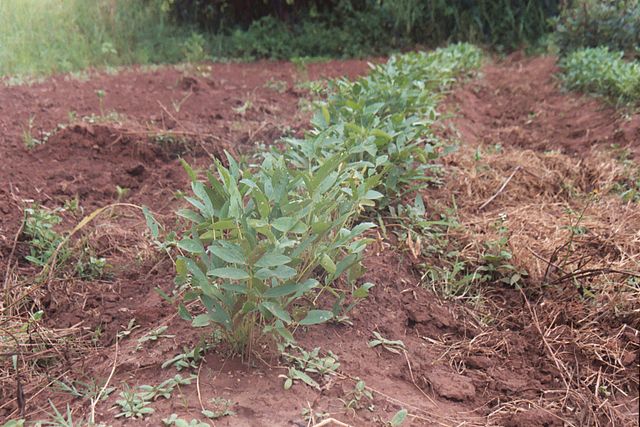
Bambara plants in the field
Vigna subterranea - MHNT


![Landscape with quinoa (Chenopodium quinoa), Cachilaya[clarification needed], Bolivia, Province La Paz, Lake Titicaca seen in background.](https://upload.wikimedia.org/wikipedia/commons/thumb/c/c3/Landscape_with_Chenopodium_quinoa_Cachilaya_Bolivia_Lake_Titicaca.jpg/450px-Landscape_with_Chenopodium_quinoa_Cachilaya_Bolivia_Lake_Titicaca.jpg)
![Village chief of Boula Téné, [Senegal] Theodore Mada Keita, holds up the fonio grain (Digitaria exilis) that helps feed his family.](https://upload.wikimedia.org/wikipedia/commons/thumb/3/34/SEN_Village_Chief_Theodore.jpg/640px-SEN_Village_Chief_Theodore.jpg)