Nekhbet is an early predynastic local goddess in Egyptian mythology, who was the patron of the city of Nekheb. Ultimately, she became the patron of Upper Egypt and one of the two patron deities for all of Ancient Egypt when it was unified.
A griffon vulture flying with its out-stretched wings
A lappet-faced vulture flying with its out-stretched wings
Nekhbet with outstretched wings below a row of uraei, from the mortuary temple of Hatshepsut, Deir el-Bahari
Granite statue of Nekhbet from Sanam in Lower Nubia, Twenty-fifth Dynasty, Ashmolean Museum
Prehistoric Egypt and Predynastic Egypt is the period of time starting at the first human settlement and ending at the First Dynasty of Egypt around 3100 BC.
Artifacts of Egypt from the Prehistoric period, from 4400 to 3100 BC. First row from top left: a Badarian ivory figurine, a Naqada jar, a Bat figurine. Second row: a diorite vase, a flint knife, a cosmetic palette.
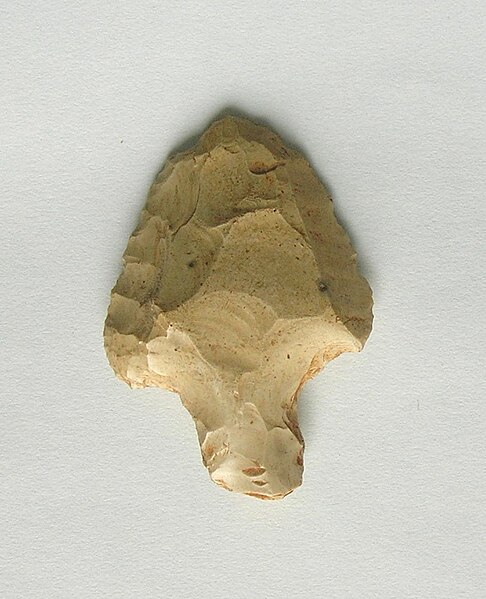
Aterian point from Zaccar, Djelfa region, Algeria.
Merimde culture clay head, circa 5,000 BC. This is one of the earliest known representations of a human head in Egypt.
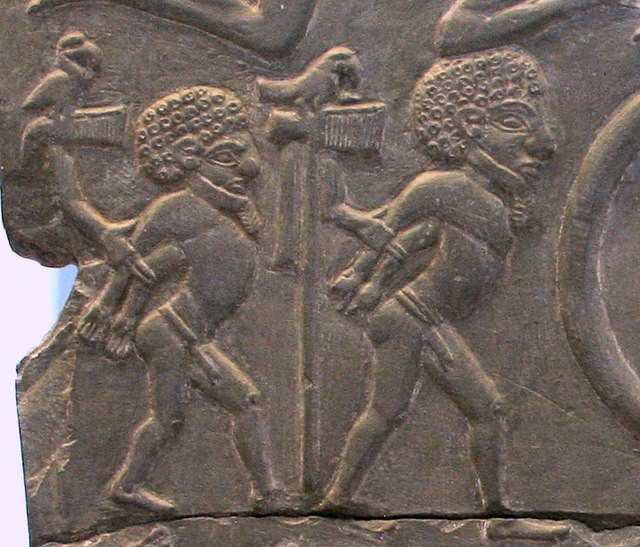
The prisoners on the Battlefield Palette may be the people of the Buto-Maadi culture subjected by the Egyptian rulers of Naqada III.