Neolithic
Videos
The Neolithic, or New Stone Age, is an archaeological period, the final division of the Stone Age in Asia, Europe and Africa. It saw the Neolithic Revolution, a wide-ranging set of developments that a

Reconstruction of Pre-Pottery Neolithic B housing in Aşıklı Höyük, modern Turkey

Reconstruction of a Neolithic farmstead, Irish National Heritage Park. The Neolithic saw the invention of agriculture.
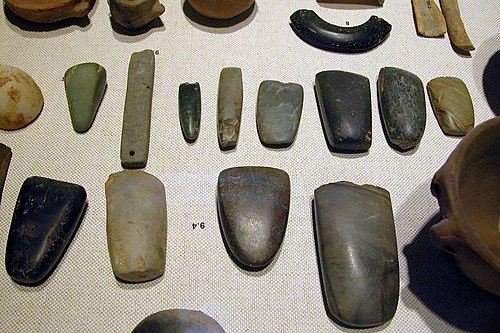
An array of Neolithic artifacts, including bracelets, axe heads, chisels, and polishing tools
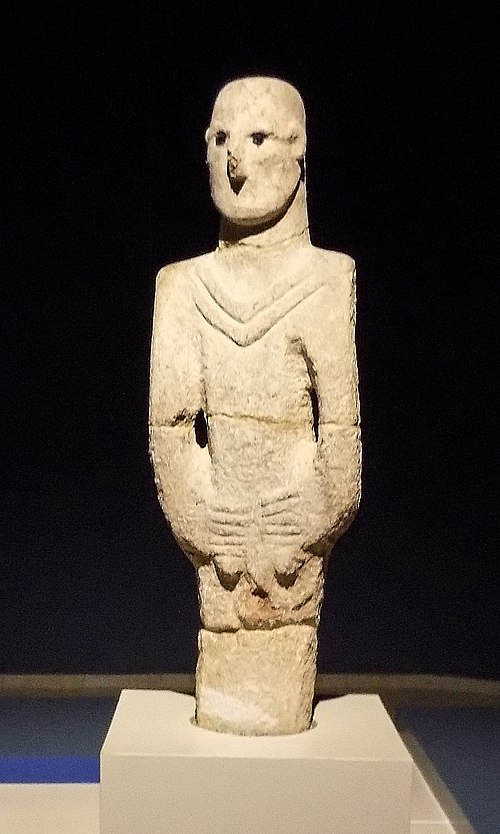
The Urfa Man c. 9000 BC. Şanlıurfa Archaeology and Mosaic Museum.
Chalcolithic
Videos
The Chalcolithic was an archaeological period characterized by the increasing use of smelted copper. It followed the Neolithic and preceded the Bronze Age. It occurred at different periods in differen
Neolithic
…in the Epipalaeolithic West Asia and Mesopotamia, and later in other parts of the world. It lasted in West Asia until the transitional period of the Chalcolithic (Copper Age) from about 6,500 years ago (4500 BC), marked by the development of metallurgy, leading up to the Bronze Age and Iron Age. In other places…

Levant Chalcolithic male figurine, 4500–3500 BC

A painting of a Copper Age walled settlement, Los Millares, Spain