Neovenator
Videos
Neovenator is a genus of carcharodontosaurian theropod dinosaur. It is known from several skeletons found in the Early Cretaceous (Hauterivian-Barremian) Wessex Formation on the south coast of the Isle of Wight, southern England. It is one of the best known theropod dinosaurs from the Early Cretaceous of Europe.


Mounted skeleton and fossils, Dinosaur Isle

First back vertebra
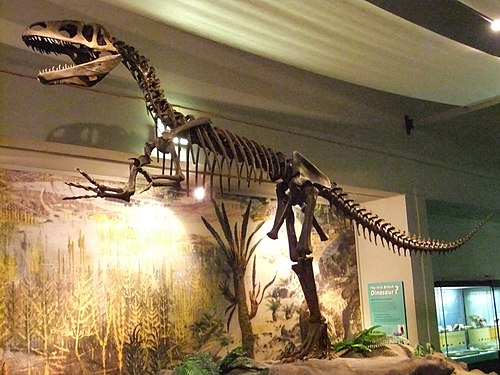
Reconstructed skeleton, World Museum Liverpool
Wessex Formation
Videos
The Wessex Formation is a fossil-rich English geological formation that dates from the Berriasian to Barremian stages of the Early Cretaceous. It forms part of the Wealden Group and underlies the younger Vectis Formation and overlies the Durlston Formation. The dominant lithology of this unit is mudstone with some interbedded sandstones. It is part of the strata of the Wessex Basin, exposed in both the Isle of Purbeck and the Isle of Wight. While the Purbeck sections are largely barren of vertebrate remains, the Isle of Wight sections are well known for producing the richest and most diverse fauna in Early Cretaceous Europe.

Exposure of the Wessex Formation west of Chilton Chine

Wessex Formation mudstones

Cast of a dinosaur footprint, Wessex Formation

Close up of L6 plant debris bed, showing charcoalised plant matter suspended in grey mudstone