New Imperialism
Videos
In historical contexts, New Imperialism characterizes a period of colonial expansion primarily by the major western powers as well as the Empire of Japan, during the late 19th and early 20th centuries
British Prime Minister Benjamin Disraeli and Queen Victoria


Indigenous African soldier pledging alliance to the Spanish flag. European armies would regularly enlist natives to garrison their own land.

Colonial government official J. Rozet, an Indo Eurasian, in negotiation with tribal chiefs (Roti Islanders), Pariti, Timor, 1896
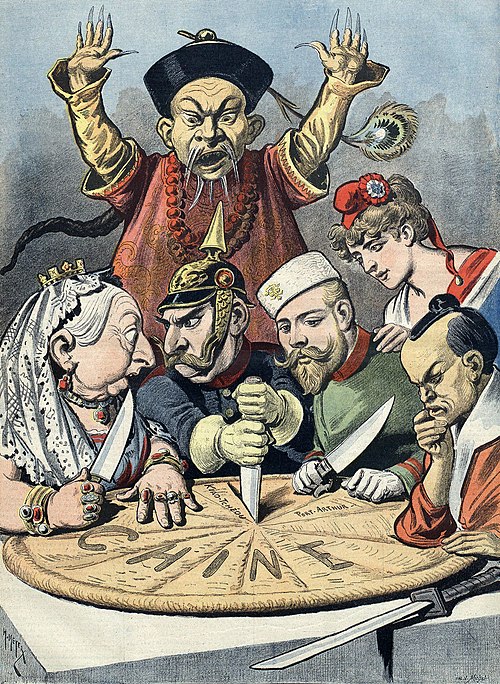
An 1898 French political cartoon depicting Britain, France, Russia, Germany, and Japan dividing China
World War I
Videos
World War I, or the First World War, also known as the Great War, was a global conflict between two coalitions: the Allies and the Central Powers. One of the deadliest conflicts in history, World War
New Imperialism
…Society and the Navy League are seen as instruments for the government to mobilize public support. The demands for annexing most of Europe and Africa in World War I are seen by Wehler as the pinnacle of social imperialism. In the 17th century, the British businessmen arrived in India and, after taking a small portion…

Bataille de Verdun 1916

British 39th Siege Battery RGA Somme 1916

American troops going forward to the battle line in the Forest of Argonne. France, September 26, 1918. NARA 530748

Arab Camel Corps