The New Zealand Railways Department, NZR or NZGR and often known as the "Railways", was a government department charged with owning and maintaining New Zealand's railway infrastructure and operating t

New Zealand Government Railways emblem

Engraving of a locomotive and carriages moving along the side of the Wellington Harbour toward the Hutt Valley, c.1875

New Zealand Railways Department Head Office, Wellington, photographed circa 1905–1908 by J N Taylor.

Southland standard gauge train - Bluff-Invercargill-Winton 1867-75
New Zealand Railways Corporation is the state-owned enterprise that owns the land beneath KiwiRail's railway network on behalf of the Crown. The corporation has existed under a number of guises since
New Zealand Railways Department
…New Zealand's railway infrastructure and operating the railway system. The department was created in 1880 and was corporatised on 1 April 1982 into the New Zealand Railways Corporation. Originally, railway construction and operation took place under the auspices of the former provincial governments and some private railways, before…
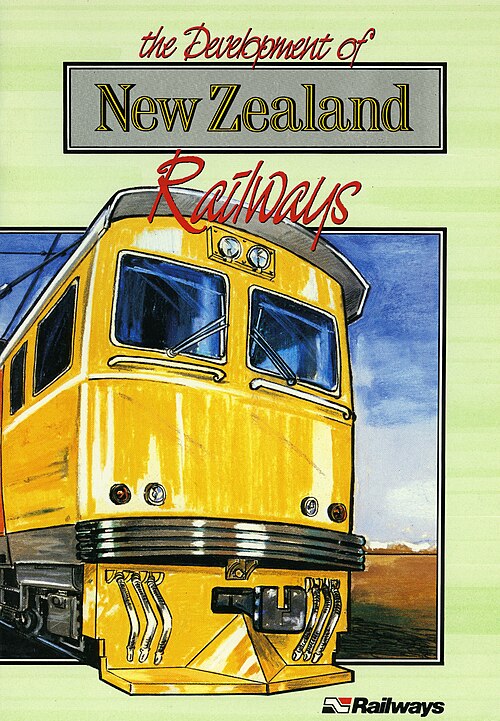
The electrification of the central section of the North Island Main Trunk was completed in 1988.

DXB5143, the first locomotive to be painted in the KiwiRail livery, stands at Wellington railway station Platform 9 on 1 July 2008.