The new wave of British heavy metal was a nationwide musical movement that began in England in the mid-1970s and achieved international attention by the early 1980s. Editor Alan Lewis coined the term

A miners' strike rally in 1984
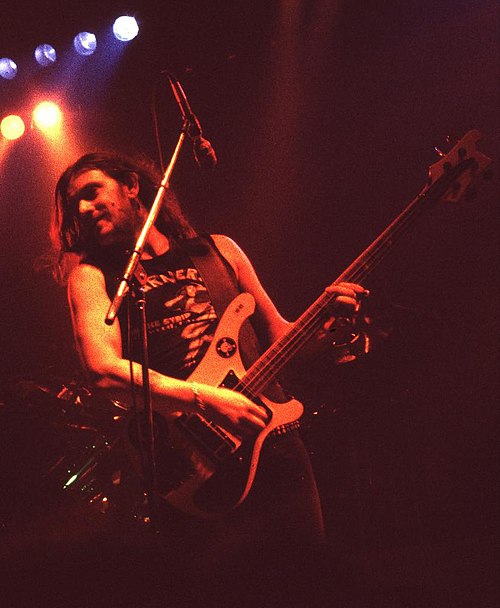
Ian "Lemmy" Kilmister of Motörhead was a reference figure for the whole movement.

Patches with band logos and cover art usually sewn on denim jackets were introduced during the NWOBHM and are still common among metalheads.

Iron Maiden's Eddie in a horror/sci-fi setting. Horror and science fiction were recurring themes in both lyrics, show scenography and cover art for NWOBHM bands.
Def Leppard
Videos
Def Leppard are an English rock band formed in Sheffield in 1976. Since 1992, the band has consisted of Rick Savage, Joe Elliott, Rick Allen, Phil Collen, and Vivian Campbell. They established themsel
New wave of British heavy metal
…heavy metal bands. Only a few survived the advent of MTV and the rise of the more commercial glam metal in the second half of the 1980s. Iron Maiden and Def Leppard became superstars; Motörhead and Saxon also had considerable success. Other groups, such as Diamond Head, Venom, and Raven, had more limited chart…

Def Leppard band members in 2018: Phil Collen, Vivian Campbell, Joe Elliott, Rick Savage and Rick Allen

Guitarist Phil Collen (pictured in 2003) joined the band in 1982.

After losing his left arm in a car accident, drummer Rick Allen (pictured in 2018) used his feet to play a custom electronic drum kit.

Guitarist Vivian Campbell in 2003. He joined Def Leppard in 1992.