Nicholas I of Russia
Videos
Nicholas I was Emperor of Russia, King of Poland, and Grand Duke of Finland from 1825 to 1855. He was the third son of Paul I and younger brother of his predecessor, Alexander I. Nicholas's 29-year re
Portrait, c. 1852

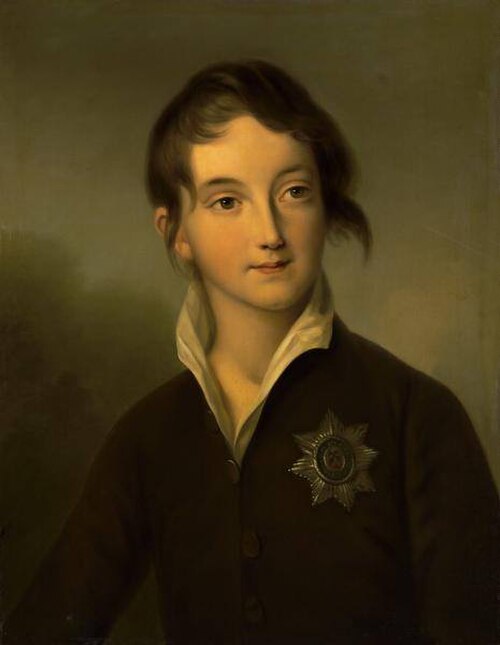
Portrait of Grand Duke Nicholas Pavlovich (c. 1808), by anonymous painter after Johann Friedrich August Tischbein, located in the Russian Museum, Saint Petersburg

Parade in Potsdam in 1817 by Franz Krüger. A painting commemorating his visit to Berlin to marry Princess Charlotte of Prussia

Nicholas I "Family Ruble" (1836) depicting the Tsar on the obverse and his family on the reverse: Tsarina Alexandra Feodorovna (center) surrounded by Alexander II as Tsarevich, Maria, Olga, Nicholas, Michael, Konstantin, and Alexandra
Alexander II of Russia
Videos
Alexander II was Emperor of Russia, King of Poland, and Grand Duke of Finland from 2 March 1855 until his assassination on 13 March 1881. He is also known as Alexander the Liberator because of his his
Nicholas I of Russia
…Duke of Finland Portrait, c. 1852 Emperor of Russia Reign 1 December 1825 – 2 March 1855 Coronation 3 September 1826 Predecessor Alexander I Successor Alexander II King of Poland Reign 1 December 1825 – 2 March 1855 Coronation 24 May 1829 Predecessor Alexander I Successor Alexander II Born 6 July 1796 Gatchina…

Formal portrait, c. 1874
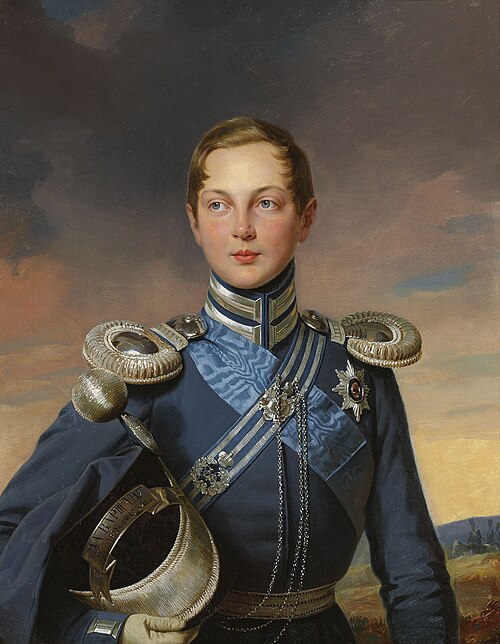
Grand Duke Alexander Nikolayevich, by Franz Krüger, 1830

Procession of Alexander II into Dormition Cathedral from the Red Porch during his coronation

The coronation of Emperor Alexander II and Empress Maria Alexandrovna on 26 August/7 September 1856 at the Dormition Cathedral of the Moscow Kremlin, painting by Mihály Zichy. The painting depicts the moment when the Emperor crowned the Empress.