Nine Years' War
Videos
The Nine Years' War was a European great power conflict from 1688 to 1697 between France and the Grand Alliance. Fought primarily in Europe, related conflicts include the Williamite war in Ireland, an

Left to right: Action at Barfleur Siege of Namur Battle of Marsaglia Bombardment of Brussels

Equestrian portrait of Louis XIV (1638–1715) by René-Antoine Houasse. The Sun King was the most powerful monarch in Europe.
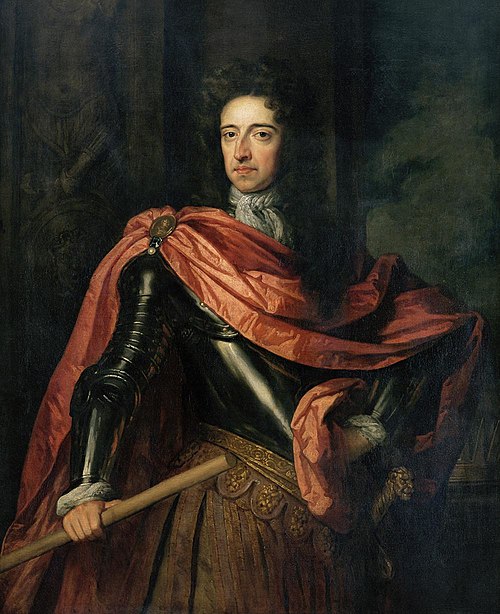
William of Orange (1650–1702), portrayed here as King William III of England by Sir Godfrey Kneller.

Frederick William, Elector of Brandenburg (1620–1688). He was succeeded by his son, Frederick, who proved to be one of William of Orange's most loyal allies.
The Grand Alliance was signed on 20 December 1689 by William III, King of England and Scotland, and Leopold I, Holy Roman Emperor. A coalition between the Dutch Republic, England, and the Habsburg Mon
Nine Years' War
…The Nine Years' War was a European great power conflict from 1688 to 1697 between France and the Grand Alliance. Fought primarily in Europe, related conflicts include the Williamite war in Ireland, and King William's War in North America. The 1678 Treaty of…

The architect of the Alliance, William III, Stadtholder of the Dutch Republic and King of England, Scotland and Ireland

The persecution of French Huguenots and his expansionist policies meant Protestant states like the Dutch Republic saw Louis XIV as a threat

The Battle of Lagos (1693) by Théodore Gudin; the loss of Dutch and English merchant ships caused huge financial losses, and increased opposition to the war