Nio (Buddhism)
Videos
Niō or Inwang or Renwang or Nhân vương, also known as the Deva or Benevolent Kings, are two wrathful and muscular guardians of the Buddha standing today at the entrance of many Buddhist temples in Eas
Nio guardians by Unkei in Nara


2016 12 15 Maijishan Grotten 麥積山石窟 anagoria 23
Heracles
Videos
Heracles, born Alcaeus or Alcides, was a divine hero in Greek mythology, the son of Zeus and Alcmene, and the foster son of Amphitryon. He was a descendant of Perseus, another son of Zeus.
Nio (Buddhism)
…èr jiàng). In the Taoist novel Fengshen Yanyi, Zheng Lun and Chen Qi were finally appointed as the two deities. Alexiares and Anicetus, twin-sons of Heracles/Hercules and Hebe/Juventas; alongside their father, they are the guardians of the gates of Mount Olympus. Buddhist and Greco-Buddhist art…
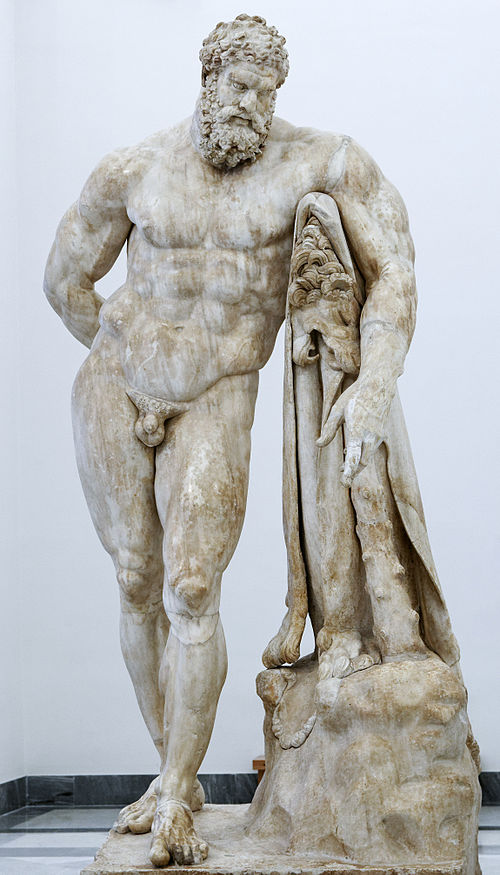
One of the most famous depictions of Heracles, Farnese Hercules, Roman marble statue on the basis of an original by Lysippos, 216 CE. National Archaeological Museum, Naples, Italy
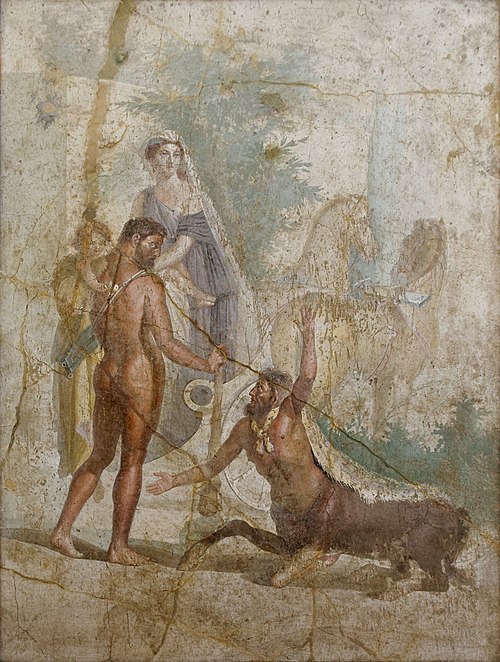
Heracles carrying his son Hyllus looks at the centaur Nessus, who is about to carry Deianira across the river on his back. Antique fresco from Pompeii.

Greek mythology influenced the Etruscans. This vase at Caere shows King Eurytus of Oechalia and Heracles in a symposium. Krater of corinthian columns called 'Krater of Eurytion', c. 600 BCE

Heracles strangling snakes (detail from an Attic red-figured stamnos, c. 480–470 BCE)