Northumberland House
Videos
Northumberland House was a large Jacobean townhouse in London, so-called because it was, for most of its history, the London residence of the Percy family, who were the Earls and later Dukes of Northu

Northumberland House by Canaletto, 1752. It shows the Strand front of Northumberland House. Note the Percy Lion atop the central facade. The Statue of Charles I at right survives in situ.

The Percy Lion (crest of Percy), after a model by Michelangelo, removed from Northumberland House in 1874, prior to demolition, by the 6th Duke and placed atop Syon House, his seat to the west of London.

The Front of Northumberland House, next the Strand, 1809

Northumberland House, shortly before it was demolished in 1874.
The destruction of country houses in 20th-century Britain was the result of a change in social conditions: many country houses of varying architectural merit were demolished by their owners. Collectiv
Northumberland House
…richest and most prominent aristocratic dynasties for many centuries. It stood at the far western end of the Strand from around 1605 until it was demolished in 1874. In its later years it overlooked Trafalgar Square. In the 16th century the Strand, which connects the City of London with the royal centre of Westminster…

Trentham Hall in Staffordshire was so lavish that in 1873 the visiting Shah of Persia remarked to the future King Edward VII of their host, "too grand for a subject; you'll have to have his head off when you come to the throne."

An advertisement, from 1912, for the roofing balustrade and urns from the demolished Trentham Hall
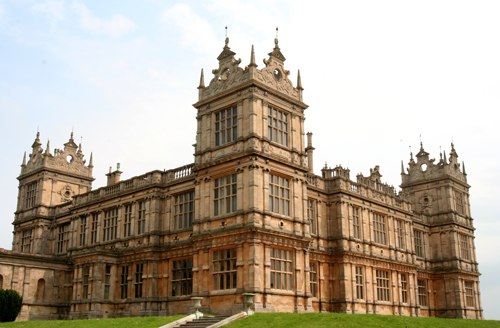
During the 20th century, the dispersal of a country house's contents became a frequent event. The 1977 sale of Mentmore Towers' contents highlighted the issue.

Small country house: Dawley Court, Uxbridge (c. 1894), was sold with 20 acres in 1929 for £10,000, and demolished soon after.