A nuclear and radiation accident is defined by the International Atomic Energy Agency as "an event that has led to significant consequences to people, the environment or the facility." Examples includ

Following the 2011 Japanese Fukushima nuclear accident, authorities shut down the nation's 54 nuclear power plants. The Fukushima site remains radioactive, with about 30,000 evacuees still living in temporary housing, although nobody has died or is expected to die from radiation effects. The difficult cleanup job will take 40 or more years, and cost tens of billions of dollars.

The abandoned city of Pripyat, Ukraine, following the Chernobyl disaster. The Chernobyl nuclear power plant is in the background.

The Kashiwazaki-Kariwa Nuclear Power Plant, a Japanese nuclear plant with seven units, the largest single nuclear power station in the world, was shut down for 21 months following an earthquake in 2007. Safety-critical systems were found to be undamaged by the earthquake.
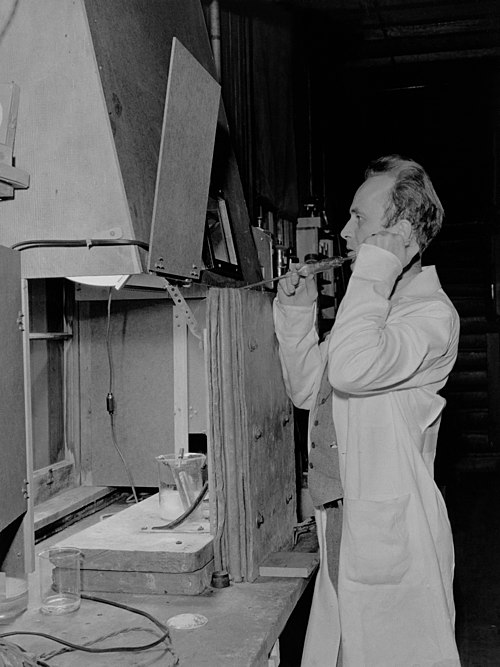
Dr. Joseph G. Hamilton was the primary researcher for the human plutonium experiments done at U.C. San Francisco from 1944 to 1947. Hamilton wrote a memo in 1950 discouraging further human experiments because the AEC would be left open "to considerable criticism" since the experiments as proposed had "a little of the Buchenwald touch."
Goiânia accident
Videos
The Goiânia accident, also known locally as the caesium-137 accident/caesium-137 Goiânia, was a radioactive contamination accident that occurred on September 13, 1987, in Goiânia, Goiás, Brazil, after
Nuclear and radiation accidents and incidents
…disaster, the Windscale fire, the radiotherapy accident in Costa Rica, the radiotherapy accident in Zaragoza, the radiation accident in Morocco, the Goiania accident, the radiation accident in Mexico City, the Samut Prakan radiation accident, and the Mayapuri radiological accident in India. The IAEA maintains a…

A photograph of the radioactive source involved in the 1987 accident.

The site of Devair Ferreira's scrapyard in 2020