Nuclear fission
Videos
Nuclear fission is a reaction in which the nucleus of an atom splits into two or more smaller nuclei. The fission process often produces neutrons and gamma rays, and releases a very large amount of en

The cooling towers of the Philippsburg Nuclear Power Plant in Germany
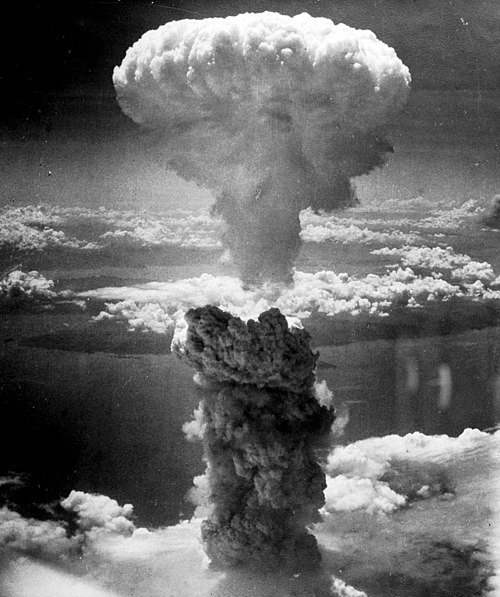
The mushroom cloud of the atomic bomb dropped on Nagasaki, Japan, on 9 August 1945 rose over 12 kilometres (7.5 mi) above the bomb's hypocenter, which killed an estimated 39,000 people.

Otto Hahn and Lise Meitner in 1912

The nuclear fission display at the Deutsches Museum in Munich. The table and instruments are originals, but would not have been together in the same room.
Otto Hahn
Videos
Otto Hahn was a German chemist who was a pioneer in the field of radiochemistry. He is referred to as the father of nuclear chemistry and discoverer of nuclear fission, the science behind nuclear reac
Nuclear fission
…atom is about 100 million times the energy released by burning one carbon atom in air to produce CO2. Nuclear fission was discovered by chemists Otto Hahn and Fritz Strassmann and physicists Lise Meitner and Otto Robert Frisch. Hahn and Strassmann proved that a fission reaction had taken place on 19…

Otto Hahn 1970

William Ramsay, London 1905

Ernest Rutherford at McGill University, Montreal 1905

Hahn and Meitner, 1913, in the chemical laboratory of the Kaiser Wilhelm Institute for Chemistry. When a colleague she did not recognise said that they had met before, Meitner replied: "You probably mistake me for Professor Hahn."