Nuclear warfare
Videos
Nuclear warfare, also known as atomic warfare, is a military conflict or prepared political strategy that deploys nuclear weaponry. Nuclear weapons are weapons of mass destruction; in contrast to conv
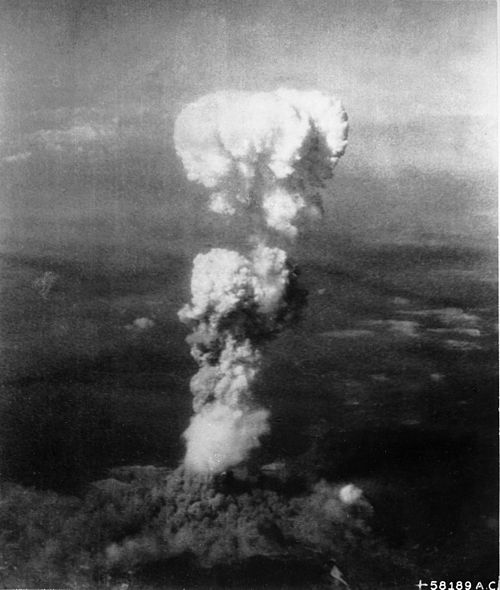
The mushroom cloud over Hiroshima following the detonation of the Little Boy nuclear bomb on 6 August 1945. The atomic bombings of Hiroshima and Nagasaki remain the first and only wartime uses of nuclear weapons in history.
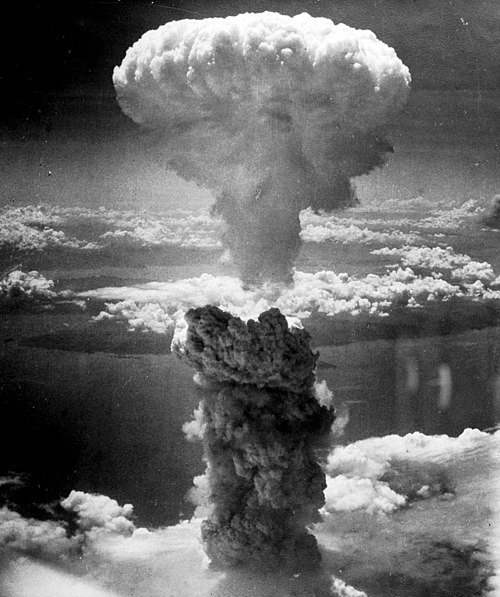
Mushroom cloud from the atomic explosion over Nagasaki rising 18,000 m (59,000 ft) into the air on the morning of August 9, 1945

A photograph of Sumiteru Taniguchi's back injuries taken in January 1946 by a U.S. Marine photographer

Hypocenter of Atomic bomb in Nagasaki
Human extinction
Videos
Human extinction, or omnicide, refers to the possible ending of the human species, either by population decline due to singular natural events—for example, space irradiation, asteroid impact, or large
Nuclear warfare
…winter, nuclear famine, and societal collapse. A global nuclear war with current national stockpiles may lead to various devastating scenarios, including human extinction. As of 2026, the first and only use of nuclear weapons in armed conflict was the United States atomic bombings of Hiroshima and Nagasaki, on August 6…

Nuclear war is an often predicted cause of the extinction of humankind.

Castle Romeo nuclear test on Bikini Atoll

Placard against omnicide, at Extinction Rebellion (2018)