Nutrient cycle
Videos
A nutrient cycle is the movement and exchange of inorganic and organic matter back into the production of matter. Energy flow is a unidirectional and noncyclic pathway, whereas the movement of mineral

From the largest to the smallest of creatures, nutrients are recycled by their movement, by their wastes, and by their metabolic activities. This illustration shows an example of the whale pump that cycles nutrients through the layers of the oceanic water column. Whales can migrate to great depths to feed on bottom fish (such as sand lance Ammodytes spp.) and surface to feed on krill and plankton at shallower levels. The whale pump enhances growth and productivity in other parts of the ecosystem.

An illustration of an earthworm casting taken from Charles Darwin's publication on the movement of organic matter in soils through the ecological activities of worms.

Fallen logs are critical components of the nutrient cycle in terrestrial forests. Nurse logs form habitats for other creatures that decompose the materials and recycle the nutrients back into production.

Abr horta Antonio Cruz
Decomposition
Videos
Decomposition is the process by which dead organic substances are broken down into simpler organic or inorganic matter such as carbon dioxide, water, simple sugars and mineral salts. The process is a

African buffalo skull decomposing in the Serengeti National Park, Tanzania

A rotten apple after it fell from a tree
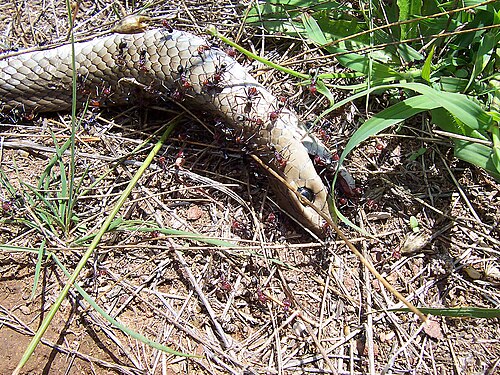
Ants eating a dead snake