Obstetrical dilemma
Videos
Photos
The obstetrical dilemma is a hypothesis to explain why humans often require assistance from other humans during childbirth to avoid complications, whereas most non-human primates give birth unassisted with relatively little difficulty. This occurs due to the tight fit of the fetal head to the maternal birth canal, which is additionally convoluted, meaning the head and therefore body of the infant must rotate during childbirth in order to fit, unlike in other, non-upright walking mammals. Consequently, there is an unusually high incidence of cephalopelvic disproportion and obstructed labor in humans.

A male pelvis (left) compared to a female pelvis (right) from a posterolateral view. Differences in the sciatic notch and overall shape of the ilium can be observed.
Pelvis
Videos
Photos
The pelvis is the lower part of the trunk, between the abdomen and the thighs, together with its embedded skeleton.

The same human pelvis, front imaged by X-ray (top), magnetic resonance imaging (middle), and 3-dimensional computed tomography (bottom)
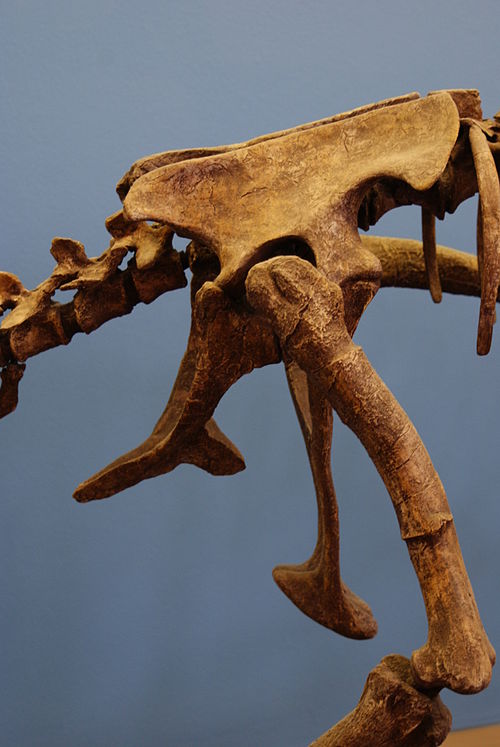
The pelvic girdle of the dinosaur Falcarius utahensis

Diameters of pelvic inlet