Odaiba
Videos
Odaiba is a large artificial island in Tokyo Bay, Japan, across the Rainbow Bridge from central Tokyo. Odaiba was initially built for defensive purposes in the 1850s. The land was dramatically expande

Odaiba as seen from the Rainbow Bridge in 2025

View of Odaiba from the north, with Fuji TV building in the center, shopping malls in the front, and Nikko hotel to the right

Edo-era Dai-Roku Daiba (第六台場; No. 6 Battery), viewed from the Rainbow Bridge. Background: the developed area of Odaiba.

A cannon from Odaiba, now at the Yasukuni Shrine. 80-pound bronze, bore: 250 mm (9.84 in), length: 3,830 mm (150.79 in).
Rainbow Bridge (Tokyo)
Videos
The Rainbow Bridge is a suspension bridge crossing northern Tokyo Bay between Shibaura Pier and the Odaiba waterfront development in Minato, Tokyo, Japan. Its official name is the Tokyo Port Bridge. T
Odaiba
…Odaiba (お台場) is a large artificial island in Tokyo Bay, Japan, across the Rainbow Bridge from central Tokyo. Odaiba was initially built for defensive purposes in the 1850s. The land was dramatically expanded during the late 20th century as…

Rainbow Bridge at night 8

A panoramic view of Rainbow Bridge and the surrounding Tokyo Bay area as seen from Odaiba during the day

View of the walkway
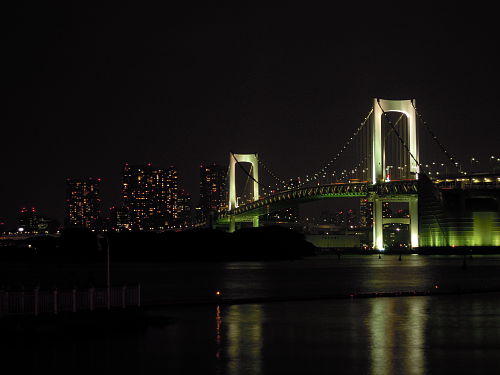
Rainbow Bridge at night, lit in white lights