Oenoanda
Videos
Photos
Oenoanda or Oinoanda was a Lycian city, in the upper valley of the River Xanthus. It is noted for the philosophical inscription by the Epicurean, Diogenes of Oenoanda.

The Greco-Roman theatre in Oenoanda

Cities of ancient Lycia

Part of the Inscription of Diogenes

Hellenic polygonal wall and Postern gate
Epicureanism
Videos
Photos
Epicureanism is a system of philosophy founded around 307 BCE based upon the teachings of Epicurus, an ancient Greek philosopher. Epicurus was an atomist and materialist, following in the steps of Democritus. His materialism led him to religious skepticism and a general attack on superstition and divine intervention. Epicureanism was originally a challenge to Platonism, and its main opponent later became Stoicism. It is a form of hedonism insofar as it declares pleasure to be its sole intrinsic goal. However, the concept that the absence of pain and fear constitutes the greatest pleasure, and its advocacy of a simple life, make it very different from hedonism as colloquially understood.
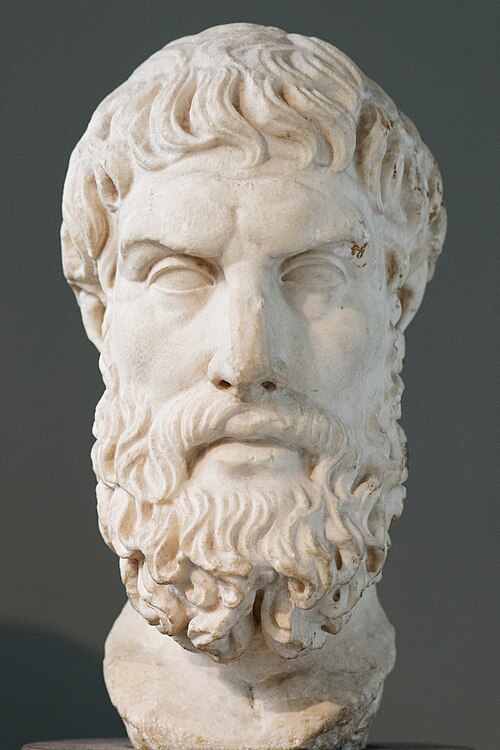
Roman Epicurus bust

De rerum natura manuscript, copied by an Augustinian friar for Pope Sixtus IV, c. 1483, after the discovery of an early manuscript in 1417 by the humanist and papal secretary Poggio Bracciolini