An offshore wind port describes several distinct types of port facilities that are used to support manufacturing, construction and operation of an offshore wind power project. Offshore wind turbine components are larger than onshore wind components. Handling of such large components requires special equipment. Transporting of components between manufacturing and assembling facilities is to be minimized. As a result, a number of offshore wind port facilities have been built in areas with a high concentration of offshore wind developments. For large offshore wind farm projects, some offshore wind ports have become strategic hubs of the industry's supply chain.
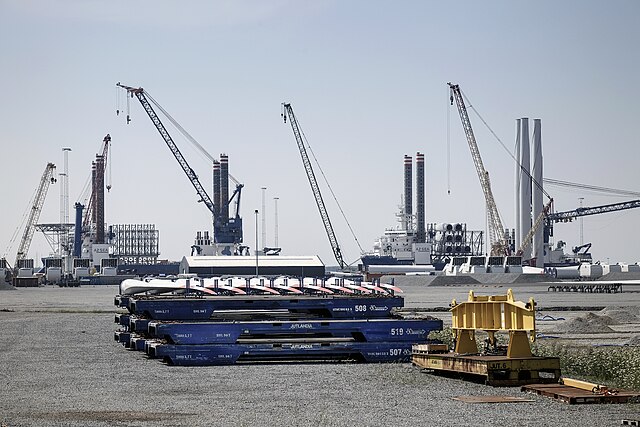
A2SEA ships at Esbjerg offshore wind port
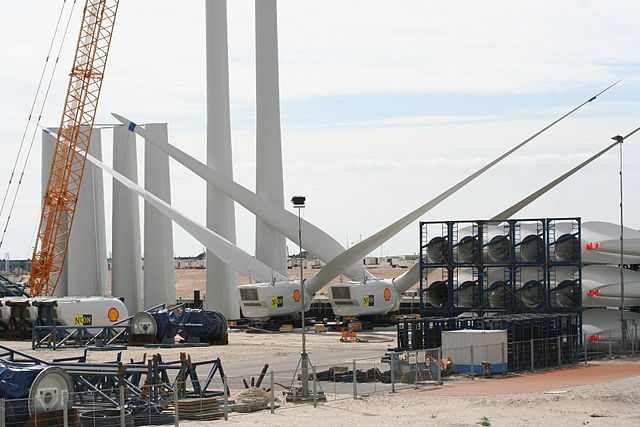
Wind turbines require much space for assembly and transport
Offshore wind power or offshore wind energy is the generation of electricity through wind farms in bodies of water, usually at sea. There are higher wind speeds offshore than on land, so offshore farms generate more electricity per amount of capacity installed. Offshore wind farms are also less controversial than those on land, as they have less impact on people and the landscape.
Wind turbines and electrical substation of Alpha Ventus Offshore Wind Farm in the North Sea
An illustration of a hypothetical offshore wind farm in 1977
Four offshore wind farms are in the Thames Estuary area: Kentish Flats, Gunfleet Sands, Thanet and London Array. The latter was the largest in the world until September 2018.
Progression of expected wind turbine evolution to deeper water