Old High German
Videos
Old High German is the earliest stage of the German language, conventionally identified as the period from around 500/750 to 1050. Rather than representing a single supra-regional form of German, Old
First page of the St. Gall Codex Abrogans (Stiftsbibliothek, cod. 911), one of the earliest texts in Old High German

Runes
Videos
Runes are the letters in a set of related alphabets, known as rune-rows, runic alphabets or futharks, native to the Germanic peoples. Runes were primarily used to represent sound values but they were
Old High German
…was among the greatest stylists in the language, and developed a systematic orthography. Old High German marked the culmination of a shift away from runic writing of the pre-OHG period to the Latin alphabet. This shift led to considerable variations in spelling conventions, as individual scribes and scriptoria…
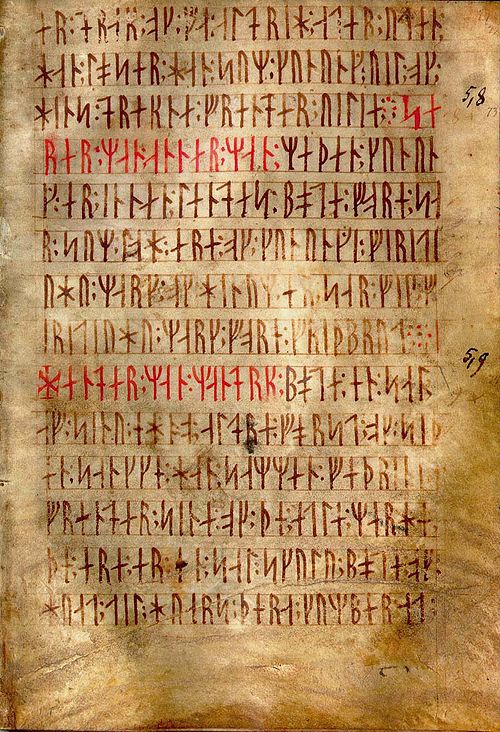
Codex Runicus c. 1300

An inscription using cipher runes, the Elder Futhark, and the Younger Futhark, on the 9th-century Rök runestone in Sweden

A Younger Futhark inscription on the 12th-century Vaksala Runestone in Sweden

Ring of Pietroassa (c. 250–400 AD) by Henri Trenk, 1875