Opaque projector
Videos
The opaque projector, or episcope is a device which displays opaque materials by shining a bright lamp onto the object from above. The episcope must be distinguished from the diascope, which is a proj

An episcope which was used in a University of Cambridge lecture hall in the late 1800s
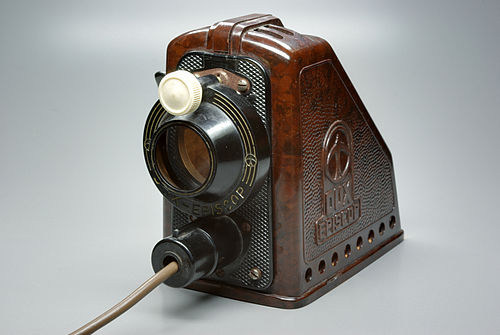
Small episcope for home use

Henry Morton's projection as illustrated in François Moigno's L'art des projections (1872)
Limelight
Videos
Limelight is a non-electric type of stage lighting that was once used in theatres and music halls. An intense illumination is created when a flame fed by oxygen and hydrogen is directed at a cylinder
Opaque projector
…reflector, but used an oxyhydrogen lamp close to the object in order to project huge clear images. The light source in early opaque projectors was often limelight. Incandescent light bulbs and halogen lamps are most commonly used today. In the early and middle parts of the 20th century, low-cost opaque projectors…

Heating calcium hydroxide (slaked lime) in a stove burner causes it to glow, although this is not as bright as a real limelight.

A 19th century limelight used for stage lighting. Collection: Stadsschouwburg (city theatre) Bruges, Belgium.