Open-end spinning
Videos
Photos
Open-end spinning is a technology for creating yarn without using a spindle. It was invented and developed in Czechoslovakia in Výzkumný ústav bavlnářský / Cotton Research Institute in Ústí nad Orlicí in 1963.

A spinner (Anett Mingram) cleans the spin box, the part containing the rotor. This allows for piecing, and a continuous conversion of sliver to yarn. (1987)
Yarn
Videos
Photos
Yarn is a long continuous length of interlocked fibres, used in sewing, crocheting, knitting, weaving, embroidery, ropemaking, and the production of textiles. Thread is a type of yarn intended for sewing by hand or machine. Modern manufactured sewing threads may be finished with wax or other lubricants to withstand the stresses involved in sewing. Embroidery threads are yarns specifically designed for needlework. Yarn can be made of a number of natural or synthetic materials, and comes in a variety of colors and thicknesses. Although yarn may be dyed different colours, most yarns are solid coloured with a uniform hue.

Balls of yarn

A visual of twisted yarn
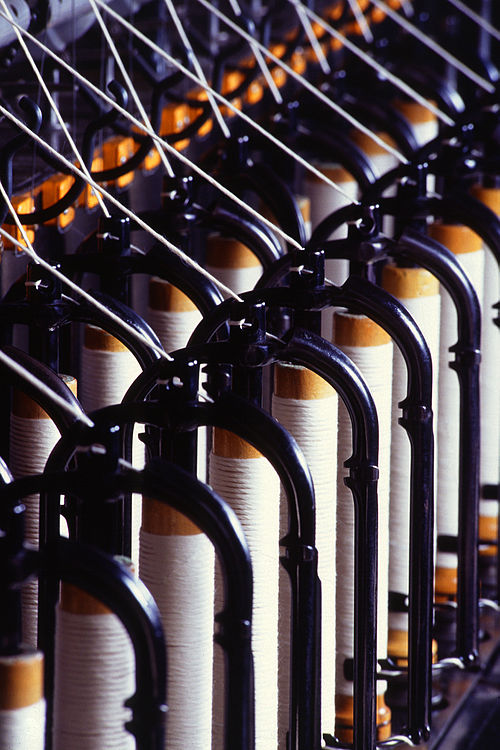
Flyer spinning of cotton

Manila hemp warp yarns being prepared for weaving in a modern textile factory